
Last updated October 15, 2026
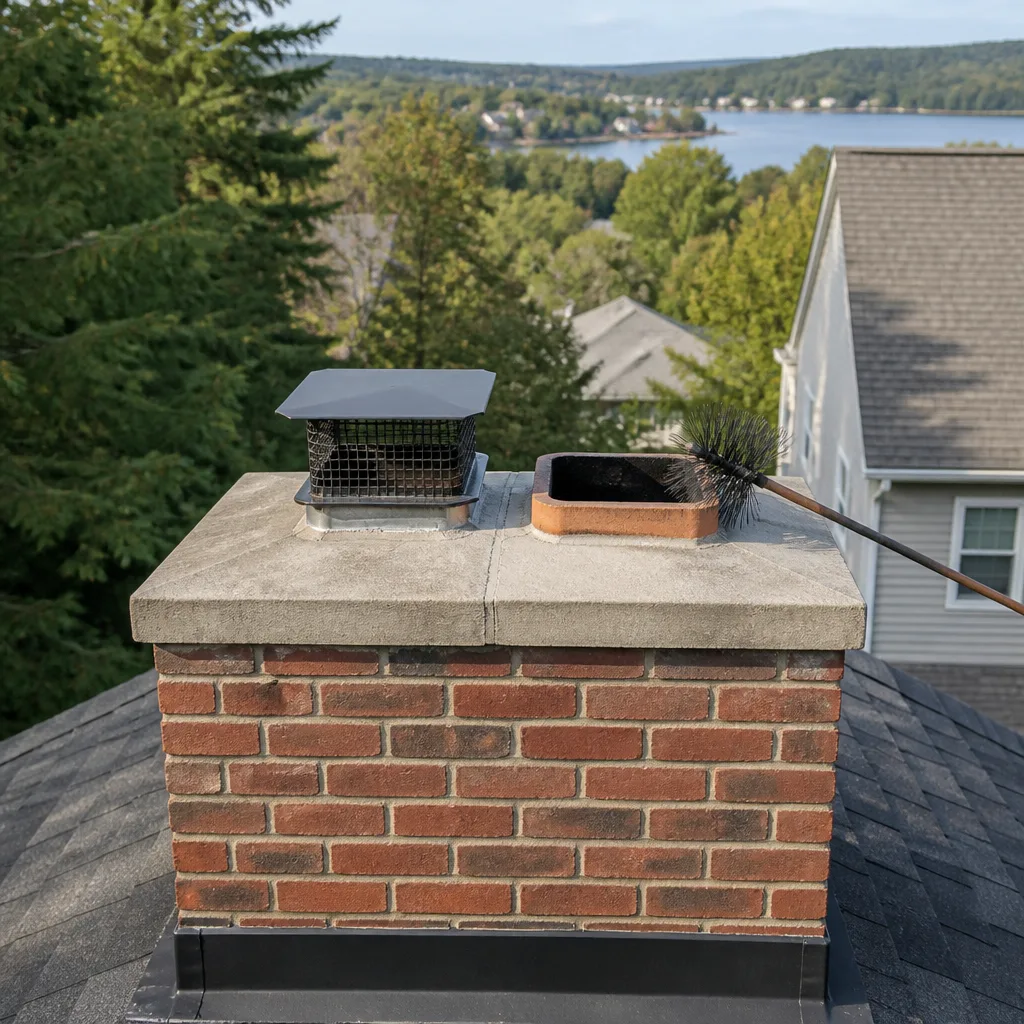 Sweep & inspection
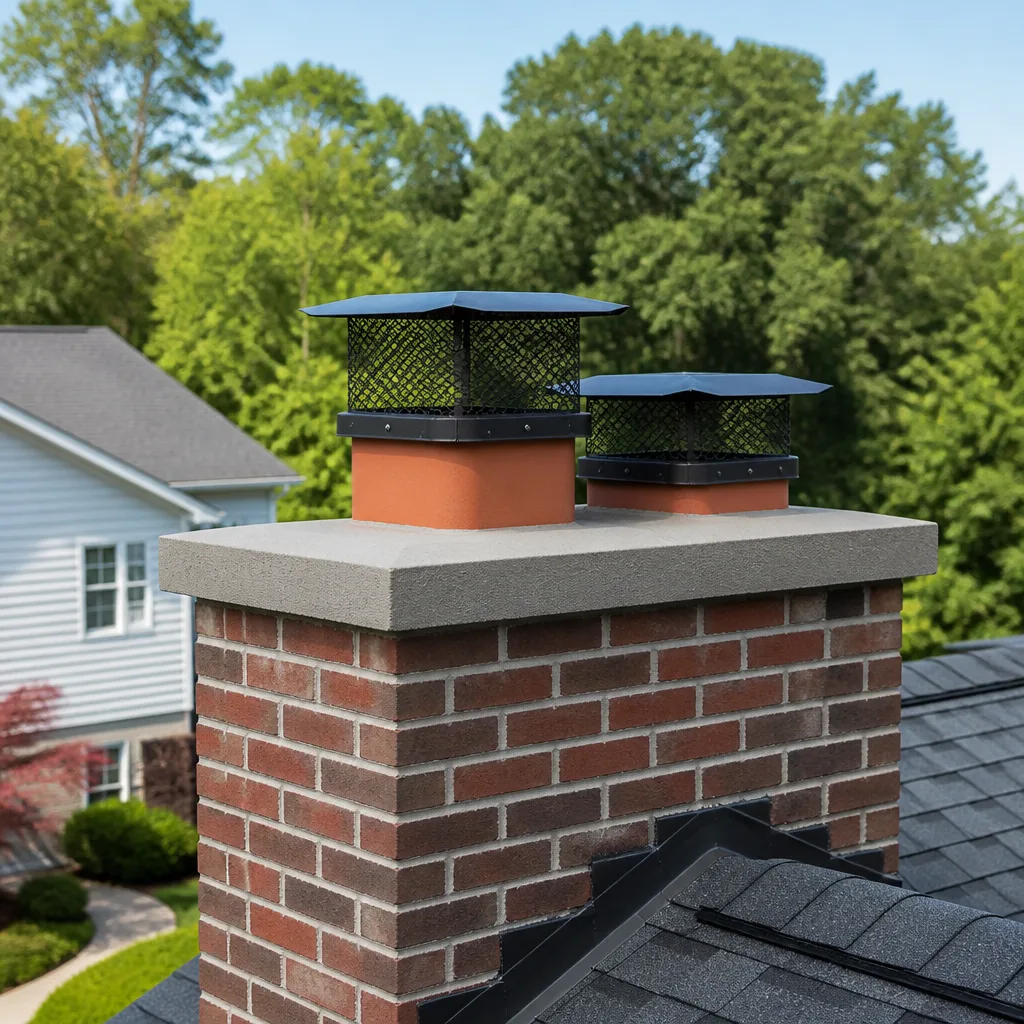 Caps & crowns
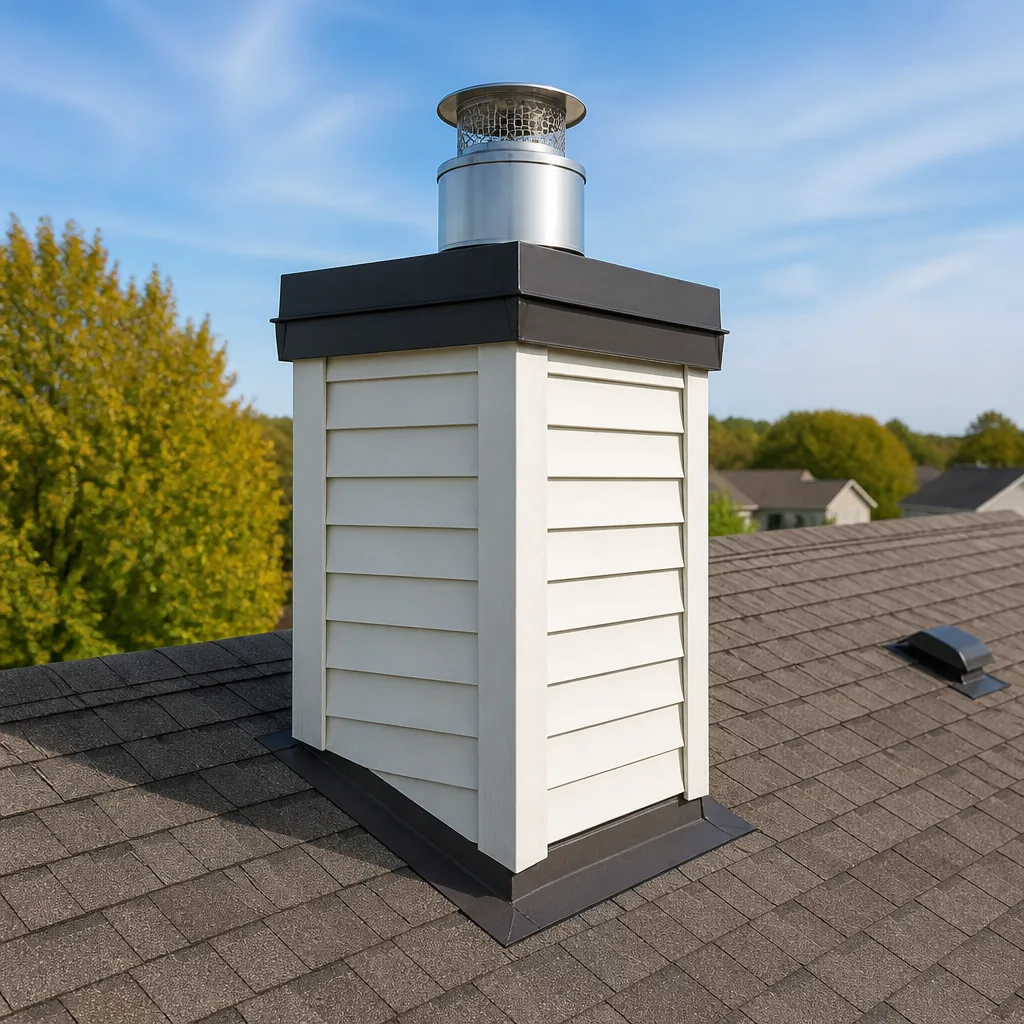 Flue relining
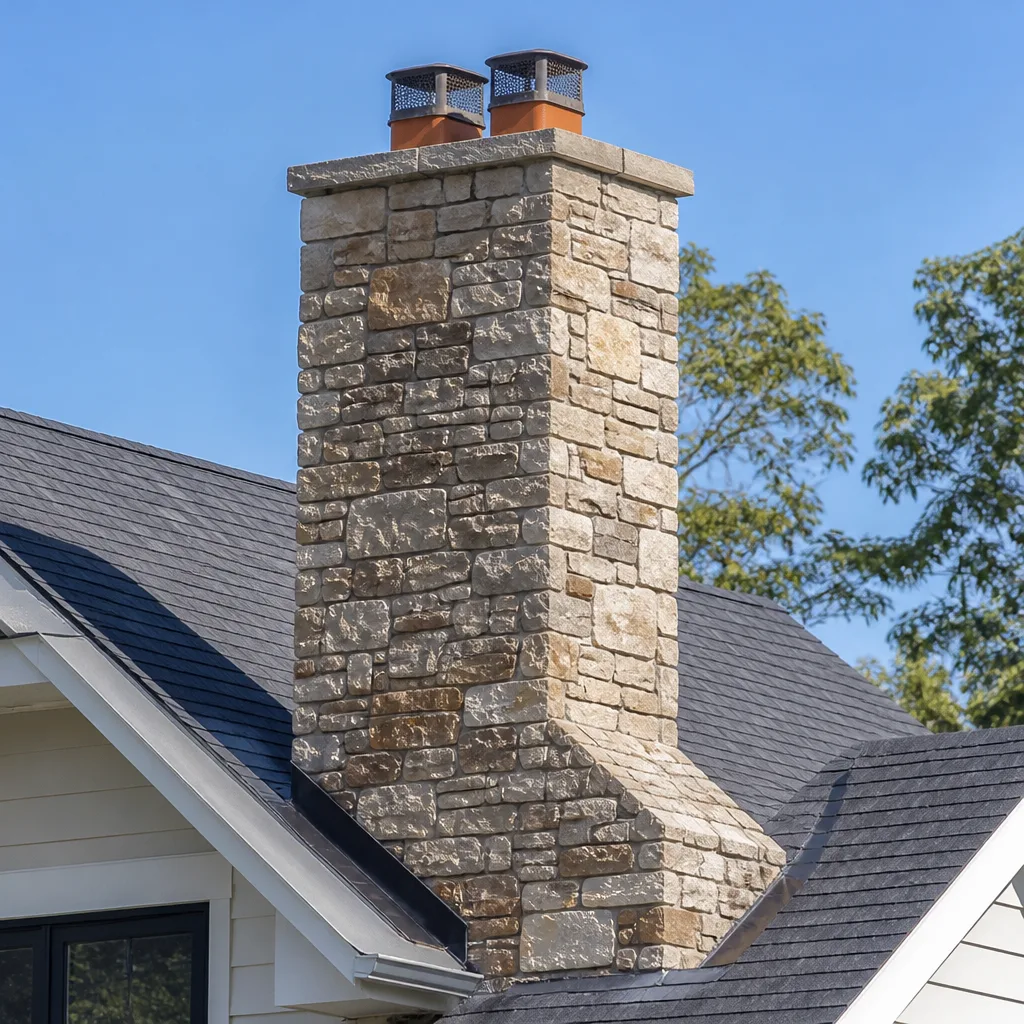 Masonry repair
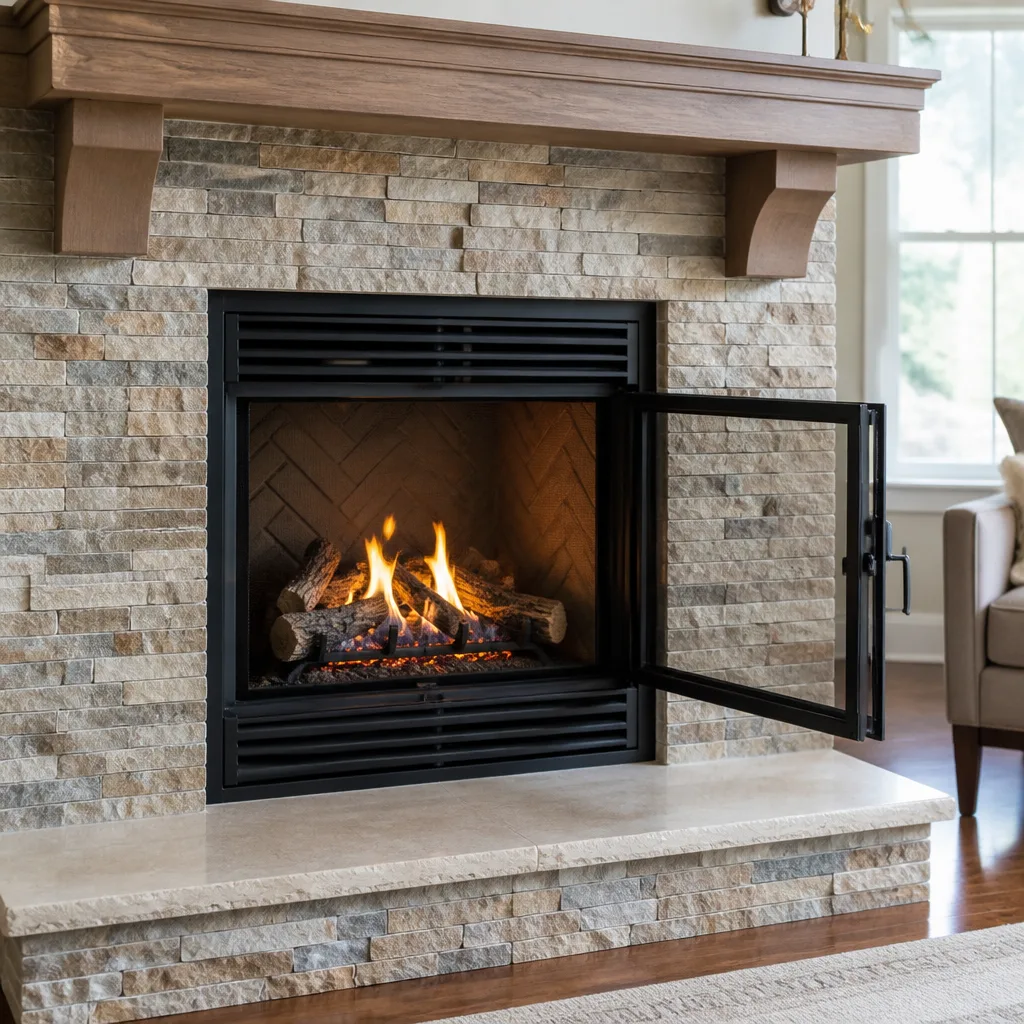 Gas fireplace service
Level 1 sweep and inspection to the NFPA 211 annual standard - flue, crown, cap, and flashing checked and photographed
Chimney sweep logs do not sweep chimneys. They loosen some creosote - which then falls where a brush and vacuum still have to collect it.
The Complete Guide to Chimney Cleaning in Henderson
Most chimney guides assume you burn wood four months a year in a cold, humid climate. Henderson homeowners burn far less frequently, but face a dust and critter intrusion problem that makes skipping inspections quietly dangerous even in years the fireplace never lights. This guide builds a locally calibrated chimney cleaning standard for Henderson from the ground up, based on what our technicians actually see working in this valley. You’ll learn why Henderson’s desert climate changes everything about chimney maintenance, what a proper cleaning actually involves, and how to protect your family without paying for work you don’t need.
Styles & brands we work with
Quick Answer
Chimney cleaning in Henderson typically costs between $189 and $350 for a standard sweep, and focuses less on heavy creosote removal than on Mojave dust extraction, wildlife debris clearing, and verifying that the flue remains safe for the occasional burn season. Henderson’s dry climate means cleaning frequency often drops to every 2 to 3 years, but inspections should still happen annually because desert dust, roof rats, and starlings create hazards that have nothing to do with how often you light a fire. Kindling Chimney Henderson provides a written price before work begins on every job, so you’ll know the exact cost before a technician touches your chimney.
Table of Contents
- Why Henderson Chimneys Are Different
- How Often Should You Clean a Chimney in Henderson?
- What a Proper Chimney Cleaning Includes
- Mojave Dust vs. Creosote: The Henderson Difference
- Wildlife Intrusion Risks in Henderson
- What a Written Care Promise Should Include
- How to Read a Level 1 Inspection Report
- Common Mistakes to Avoid
- When to Call a Professional
- Frequently Asked Questions
- The Bottom Line
Why Henderson Chimneys Are Different
Henderson sits in the Mojave Desert, where annual rainfall averages just over 4 inches and summer temperatures routinely cross 110 degrees. That changes chimney maintenance in ways national guides simply don’t address. The air here carries fine alkaline dust that settles into flues, onto dampers, and across masonry surfaces within weeks, not months. When that dust mixes with even small amounts of creosote from occasional fires, it forms a gritty, clingy residue that behaves differently from the thick, glossy creosote deposits common in wetter climates.
We’ve worked on chimneys across Henderson, from Green Valley Ranch to Anthem and Lake Las Vegas, and the pattern is consistent. Homes that burn fires only six to ten times per winter still need flue attention because the desert does its own kind of buildup. Add in the fact that Henderson’s short burn season often stretches from late November through February, and you get a realistic picture: the creosote risk stays relatively low, but the dust accumulation and wildlife problems remain year-round.
This means the Henderson standard isn’t “clean every fall.” It’s “inspect every fall, clean when the inspection shows buildup that actually matters.” That distinction saves families real money while still keeping the chimney safe. A competent chimney company in Henderson should be able to tell the difference between a flue that simply looks dusty and one that genuinely needs a sweep before the first fire of the season.
How Often Should You Clean a Chimney in Henderson?
The honest answer for most Henderson homes is every 2 to 3 years, but that comes with an important caveat: schedule a Level 1 inspection annually, even if you skip the cleaning. Here’s why. The National Fire Protection Association’s chimney inspection standards call for annual evaluation of any fireplace that sees regular use. But “regular use” in Henderson rarely matches the four-fires-a-week pattern common in colder states.
A family in Henderson burning 10 to 15 fires per season will typically produce about a quarter-inch of creosote in a year. That half of what we’d expect in a damp climate like Portland or Seattle, where the same fire count produces heavier, stickier deposits. Consequently, a biannual or triennial chimney sweep in Henderson usually keeps the flue in serviceable condition, provided the annual inspection catches dust buildup, cracked mortar, or a missing spark arrestor before those problems compound.
What changes the timeline for any individual home:
- Fire frequency: Burning three or more fires weekly from November through February may justify annual cleaning.
- Wood quality: Burning unseasoned or soft wood accelerates creosote production, even in dry air.
- Wildlife activity: Homes near washes, golf courses, or open desert see more roof rat and bird intrusion, which can clog flues faster than fire residue ever will.
- Flue type: Unlined masonry chimneys accumulate deposits faster than stainless steel liners and usually need more frequent attention.
- Prior repairs: If a liner was recently installed or masonry repointed, ask the technician how that changes the cleaning schedule.
If you’re not sure where your chimney falls, a technician can inspect and tell you plainly whether a cleaning is actually needed. That’s the local standard that makes sense for Henderson’s burn patterns. We recommend the annual inspection, clean on evidence, and explain what we saw on camera so you can make the call with confidence.
What a Proper Chimney Cleaning Includes
A professional chimney cleaning in Henderson should never be a fast brush-through. A complete service addresses the entire system, from firebox to cap, and leaves the home in the condition it was found. That last part matters for families with kids and pets, who should never have to wonder whether soot dusted the living room while the crew worked.
Here is the step-by-step process our technicians follow on every chimney cleaning visit in Henderson:
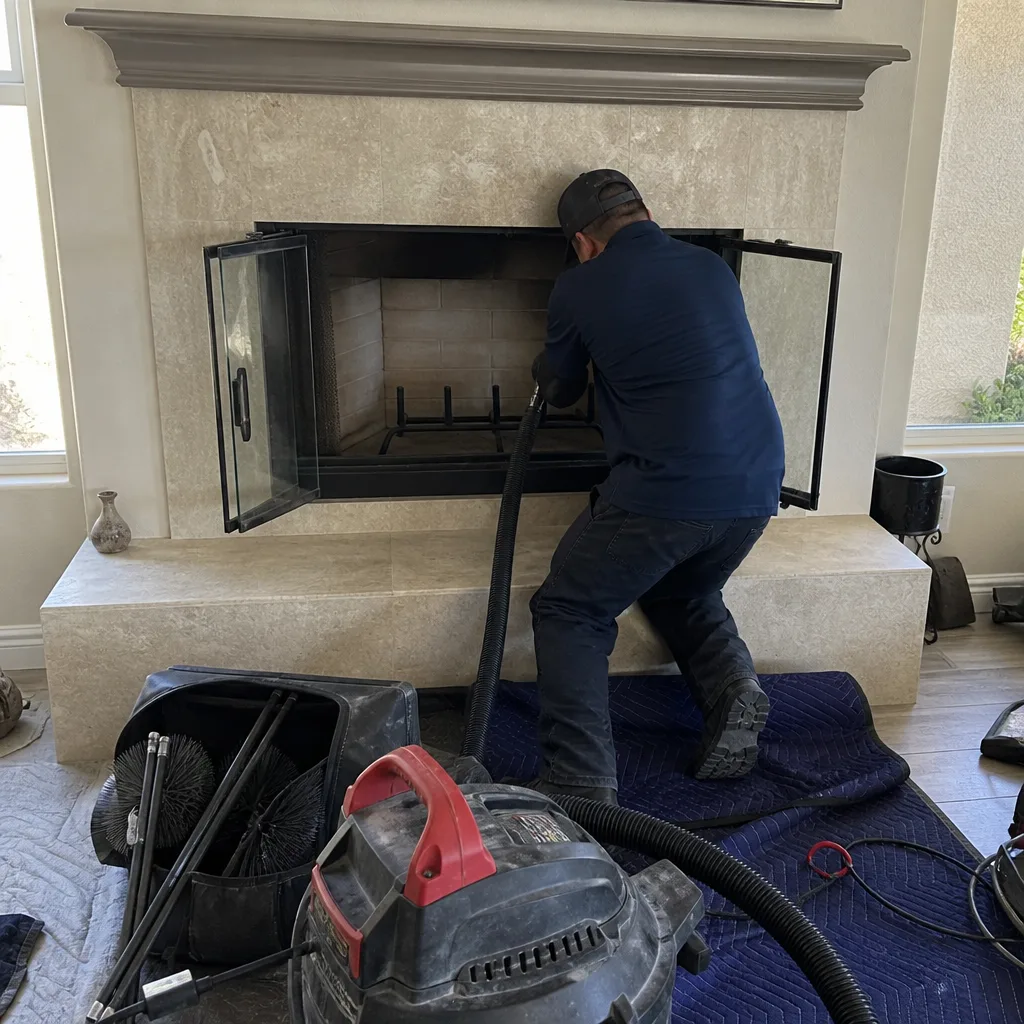
- Floor and furniture protection: Drop cloths go down before any equipment enters the home. Our crews wear shoe covers from the moment they step inside, and nothing gets moved without asking first.
- System inspection: The technician examines the firebox, damper, smoke chamber, flue, crown, and cap. A camera goes up or down the flue so we can see exactly what’s inside and document it before cleaning begins.
- Mechanical sweeping: Using appropriately sized brushes, the technician removes soot, creosote, dust, and debris from the flue walls. In Henderson, this often means clearing more fine desert dust than glossy creosote.
- Smoke chamber and damper cleaning: These areas accumulate debris that a basic flue brushing misses. A thorough service includes them.
- Firebox cleanout: Ash and debris are removed from the firebox floor and disposed of properly.
- Cap and screen check: The technician verifies the cap is seated, the spark arrestor mesh is intact, and no animal nesting materials are blocking airflow.
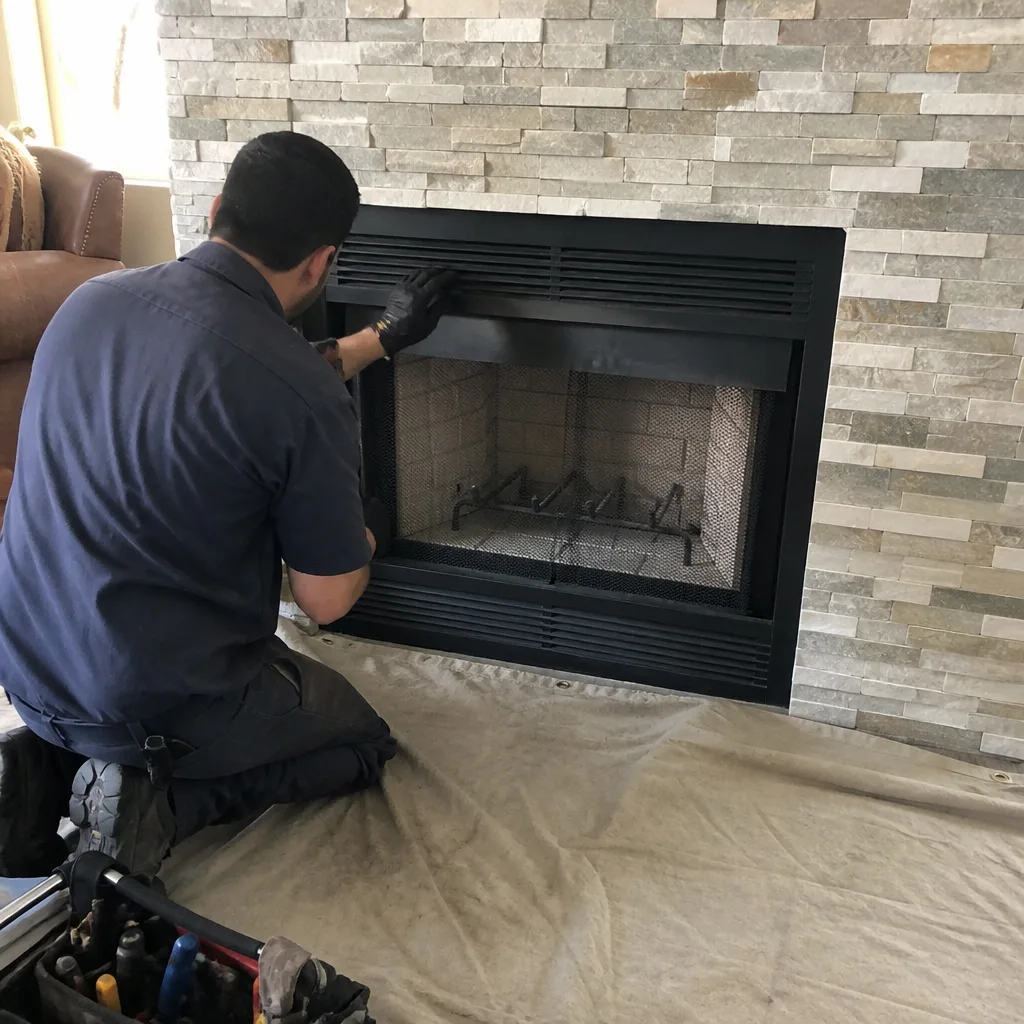
- Final camera verification: After sweeping, we run the camera again so you can see the flue is clear. You’ll see what we see.
- Clean-up documentation: The drop cloths are pulled, the work area is vacuumed, and a photo of the clean-up is taken before the crew leaves.
Every one of those steps is part of the Cedarwell Care Promise, which includes shoe covers and drop cloths, a written price before work begins, and a photo of the clean-up before the crew leaves. When we say pet-safe products are used where there is a choice, that means open-flame fireplaces and gas logs are treated with the same caution, and no harsh chemical odors are left behind in a home where a baby naps or a dog sniffs the carpet.
Mojave Dust vs. Creosote: The Henderson Difference
Here’s the counterintuitive part of chimney care in Henderson: the primary contaminant is often not creosote at all, but fine alkaline dust that blows in from the surrounding desert. This dust enters through the chimney cap, settles into the flue, and accumulates in the smoke chamber. When the fireplace sits unused during the long off-season, that dust layer thickens quietly.
Why does that matter? Because Mojave dust behaves differently than creosote when a fire finally lights. Dust alone is not flammable the way creosote is, but it restricts draft, abrades mortar joints over time, and holds moisture against the flue walls during rare rain events. If the dust mixes with even a thin layer of creosote from the prior winter’s fires, the combination adheres to the flue lining and narrows the passageway. That’s a condition our technicians see regularly in Henderson homes that haven’t been serviced in three or four years.
Standard brushing alone doesn’t fully address this. A proper Henderson cleaning includes:
- Fine-particle removal: High-efficiency vacuum filtration captures dust that basic brushing just kicks into the air.
- Smoke chamber access: Dust collects where the flue narrows, and a surface brush from above misses it.
- Damper inspection: Desert dust builds up on damper hinges and tracks, making the damper stiff or preventing a full seal when closed.
- Cap and screen cleaning: The spark arrestor mesh clogs with dust and fine debris, reducing draft even when the flue itself is clear.
If you’ve skipped a cleaning for several years in Henderson, do not assume the flue is clean just because you haven’t burned much. The dust alone can create a restriction worth addressing before you light the first fire of the season. A camera inspection shows exactly what’s coating the flue walls, so nothing is recommended without evidence you can see for yourself.
Wildlife Intrusion Risks in Henderson
Henderson’s desert location puts homes in direct contact with wildlife species that treat chimneys as shelter. Roof rats are common throughout the valley, especially near neighborhoods with mature landscaping, fruit trees, and access to water. They climb stucco walls, brick veneer, and trellises to reach rooflines, then enter uncapped or poorly screened chimneys in search of nesting sites.
Starlings are another regular offender. These birds nest in cavities and find chimney flues ideal, particularly during spring. Their nesting materials are highly flammable and can completely block a flue. Gambel’s quail, while less likely to enter chimneys, are abundant in Henderson neighborhoods near washes and open desert, and their presence attracts predators like roof rats looking for eggs, which sometimes leads the rats onto rooftops and into chimneys.
What this means for chimney maintenance in Henderson:
- Cap and screen checks are non-negotiable. A missing or damaged spark arrestor is an open invitation. This should be verified during every annual inspection.
- Nesting materials must be removed before any fire is lit. Bird nests and rodent debris burn hot and can quickly become a chimney fire.
- Off-season blockage is common. A fireplace unused from March through October can become blocked by wildlife without the homeowner ever knowing.
- Professional removal is safer than DIY. Rodent droppings carry hantavirus risk, and nesting removal should be done by a trained technician with proper equipment.
We use materials from manufacturers like Olympia Chimney and Famco when repairing or replacing caps and screens, which means the barrier that keeps Henderson’s wildlife out is built to last through the desert heat and sun exposure. A well-fitted cap with intact mesh is the single most effective wildlife barrier a chimney can have.
What a Written Care Promise Should Include
Before any Henderson technician starts work on your chimney, you should have a written care promise in hand. This is the difference between a company that respects your home and one that hopes you won’t ask questions. At Kindling Chimney Henderson, our promise is called the Cedarwell Care Promise, and it covers three things that matter most to families with children and pets.
First: a written price before any work starts. The price includes the full scope of the cleaning, the inspection, and any standard supplies. If the technician finds something mid-job that needs attention, like a damaged cap or a cracked flue tile, you’ll be shown the camera footage and given a separate, written price for that repair before anything additional is done. No surprise charges, no pressure to sign on the spot.
Second: clean-up scope spelled out. The promise names exactly what will be protected inside the home: drop cloths placed before equipment, shoe covers worn on every visit, nothing moved without asking, and a photo of the clean-up taken before the crew leaves. For homes with babies crawling on the floor or dogs who inspect everything with their noses, this is not a nice-to-have. It’s the whole point.
Third: what happens if something is found. If hidden damage is discovered during a fireplace repair or cleaning visit, the promise should explain how you’ll be notified and what your options are. The technician should be able to tell you plainly whether the work can wait, what the risk is, and what the repair would cost. No scare tactics, just facts.
Every job is also backed by the 365-Day Done Right Promise: if it’s not done right, we make it right. That commitment follows every sweep, inspection, and repair we perform in Henderson, and it’s the reason a written promise matters more than a verbal one. You should never have to take a contractor’s word for what happened inside your chimney.
How to Read a Level 1 Inspection Report
A Level 1 chimney inspection is the standard evaluation performed during routine cleanings and annual check-ups. It covers the readily accessible portions of the chimney, including the firebox, damper, smoke chamber, flue interior, exterior chimney structure, and basic cap condition. Understanding what the report actually says helps you make informed decisions about your chimney without relying on a contractor’s interpretation alone.
Here’s what to look for, line by line:
- “Serviceable condition”: This means the chimney is safe for continued use under normal conditions. It does not mean “perfect” or “like new” or “nothing will ever need attention.” It means the system functions as intended and no immediate hazards were found. If you see this phrasing on a report, the chimney passed inspection.
- “Glazed creosote present”: Glazed creosote is the hard, shiny, tar-like buildup that forms under certain burn conditions. It cannot be removed with standard brushing and requires specialized treatment. If a report says glazed creosote was found, ask what remediation is needed and what it will cost.
- “Third-stage creosote”: This is the most dangerous form of creosote, highly concentrated and flammable. It typically requires chemical treatment or mechanical removal beyond a standard sweep.
- “Flue tile spalling” or “cracked flue liner”: Spalling is the flaking or breaking of clay flue tiles, often caused by moisture or repeated heating and cooling. A cracked liner is a fire hazard and should be addressed, usually with a stainless steel liner system.
- “Missing or damaged cap” or “spark arrestor needs replacement”: This is straightforward: the protective barrier at the top of the chimney is compromised and should be replaced. In Henderson, this matters doubly because of the wildlife intrusion risk.
- “Accumulation of debris” or “nesting material”: Something has been living in or falling into the chimney. The material must be removed, and the entry point sealed to prevent recurrence.
When we perform a chimney inspection in Henderson, you get a written report plus camera footage that shows exactly what we found. That means the term “serviceable condition” isn’t just words on a page; it’s something you can verify with your own eyes, and something we can explain in plain language while sitting at your kitchen table.
Common Mistakes to Avoid
- Skipping inspections in years you don’t burn: Dust and wildlife don’t care whether the fireplace was used. An unused chimney can become blocked or damaged just as easily as a well-used one, and Henderson’s long off-season makes this especially common.
- Burning unseasoned wood: Wood that hasn’t dried properly creates more creosote per burn than seasoned wood, even in Henderson’s dry climate.
- Ignoring a stiff or stuck damper: A damper that won’t fully open or close indicates buildup or mechanical wear. It’s often a quick fix during a standard cleaning, but left unattended, it can become a larger repair.
- Assuming a low-use fireplace never needs service: Even a fireplace used twice a year sees temperature swings, dust infiltration, and wildlife interest. The system’s condition isn’t determined by use alone.
- Hiring a technician who quotes without inspecting: A phone quote for chimney cleaning is a guess. A written price should be delivered only after a technician has seen the actual chimney. At Kindling Chimney Henderson, a written price always comes before work begins, never before the technician has laid eyes on the system.
- Delaying cap replacement: A missing or damaged cap invites roof rats and starlings, and a single nesting season can create a serious blockage. Replacement caps are affordable compared to the cost of removing an animal or repairing fire damage.
- Forgetting to verify clean-up procedures: Some companies leave soot dust on floors and furniture. A home with children crawling or pets napping nearby deserves better, and the clean-up standard should be written, not assumed.
When to Call a Professional
Call a chimney professional if you notice a strong smoky odor coming from the fireplace when it’s closed, see black staining around the firebox opening, hear animal sounds from the chimney, or struggle to open the damper. If it’s been more than two years since the last inspection, schedule one before you light the first fire of the season, regardless of how often you burn. And if you see fine dust falling into the firebox when the wind blows, that’s a sign the flue needs attention even though the fireplace hasn’t been used. Kindling Chimney Henderson offers free estimates in Henderson, and a live person answers the phone 24 hours a day, 7 days a week. Call (775) 485-5516 to book an inspection or ask a question.
Frequently Asked Questions
A standard chimney cleaning in Henderson typically runs between $189 and $350, depending on the flue size, accessibility, and whether wildlife debris or glazed creosote is present. Kindling Chimney Henderson provides a written price before any work starts, so you’ll know the exact cost before a technician begins. Call (775) 485-5516 for an exact quote, estimates are free.
Not always, and you should never accept that recommendation without seeing the evidence. If a technician says the liner needs replacement, ask to see the camera footage showing cracks, spalling, or gaps, and request a written explanation of what happens if the liner is left as-is. Our policy at Kindling Chimney Henderson is simple: nothing is recommended without camera evidence you can see for yourself. If the liner is in serviceable condition or can safely wait, we’ll say so plainly.
Most Henderson homes need a sweep every 2 to 3 years, but an annual Level 1 inspection is still recommended. The short burn season produces less creosote than colder climates, but Mojave dust and wildlife intrusion create hazards that build up even in years the fireplace never lights. Your technician should be able to tell you, based on camera footage, whether a cleaning is actually needed or whether the chimney can wait another season.
Dust, wildlife nesting, and whatever creosote has accumulated will steadily restrict the flue, which impairs draft, pushes smoke into the home, and increases fire risk. A blocked chimney can also become a carbon monoxide hazard if exhaust gases can’t vent properly. The specific risk depends on what’s actually inside your flue, which is why a camera inspection should always precede the recommendation to clean or repair. Call (775) 485-5516 and we’ll show you exactly what we see.
DIY chimney cleaning is rarely advisable because the hazards, creosote exposure, improper brush sizing, and missed blockages, outweigh the savings. Dust from rodent droppings or old creosote can be harmful if you’re not equipped with proper filtration, and a fall risk exists on any roofline. A trained technician has the equipment, the camera, and the experience to do it safely and document the result. We recommend leaving this one to a professional.
Yes. Kindling Chimney Henderson provides chimney sweeping, chimney inspection, and fireplace repair in Henderson, including liner replacement, damper repair, cap installation, and smoke chamber work. All repairs use professional-grade materials from brands like DuraFlex, HeatShield, and Copperfield, and every job is backed by the 365-Day Done Right Promise.
The Bottom Line
Henderson’s desert climate demands a chimney standard that reflects local reality: less creosote than cold-weather states, but more dust, more wildlife, and more off-season neglect. The right approach is an annual inspection, a cleaning every 2 to 3 years, and a written care promise that protects your floors, your air quality, and your family from surprise charges. Kindling Chimney Henderson builds that promise into every visit: a written price before work begins, shoe covers and drop cloths on arrival, a camera-verified flue, and a photo of the clean-up before the crew leaves. When you’re ready to schedule, a live person answers at (775) 485-5516 24 hours a day, 7 days a week.
Written by Danny Cortes, Owner at Kindling Chimney Henderson, serving Henderson since 2003.
See the difference
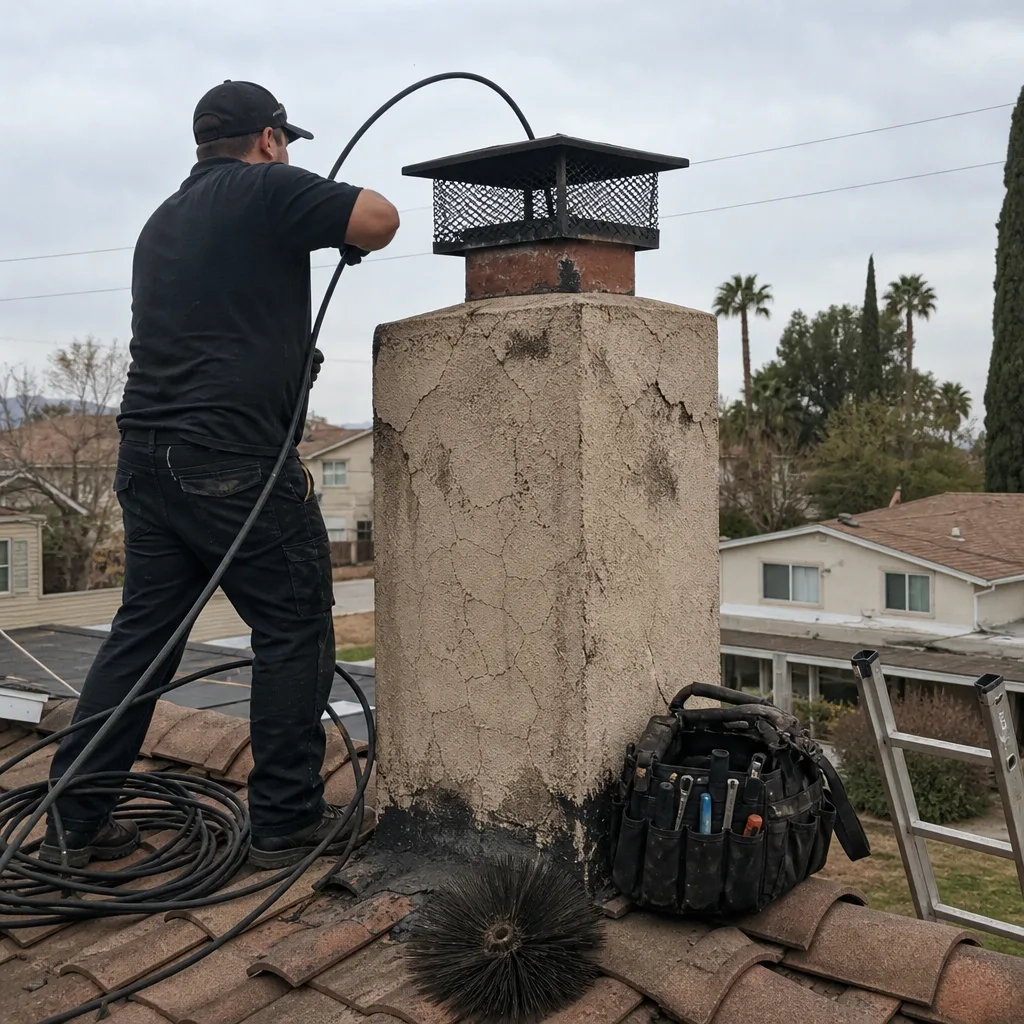 Before
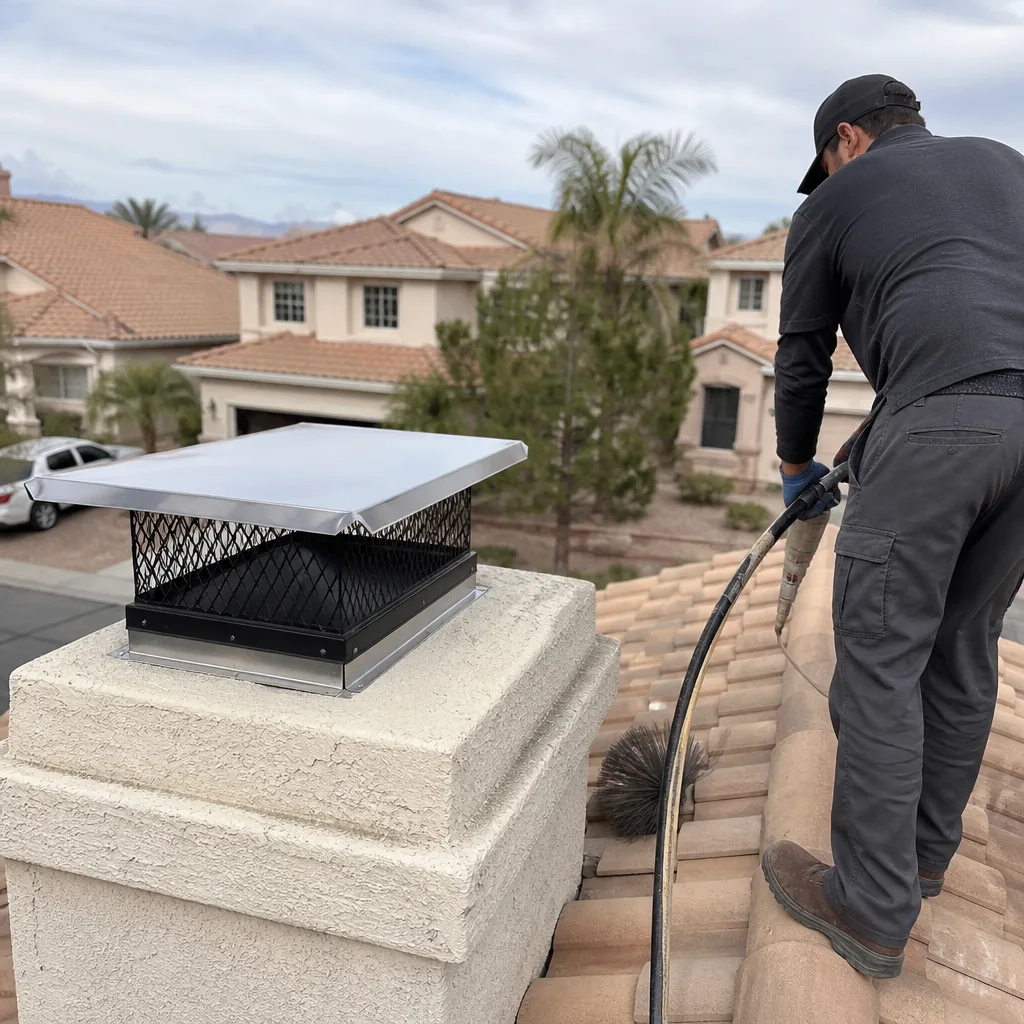 After
After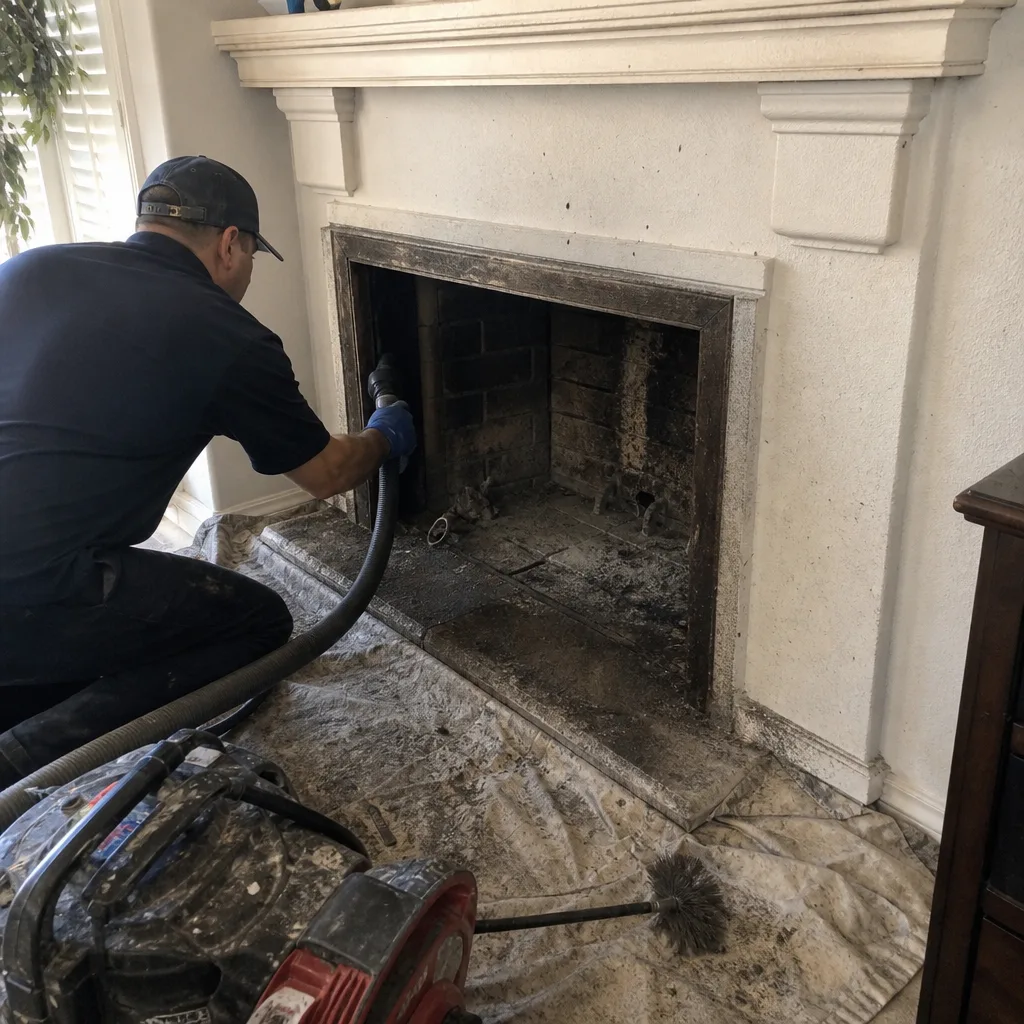 Before
 After
After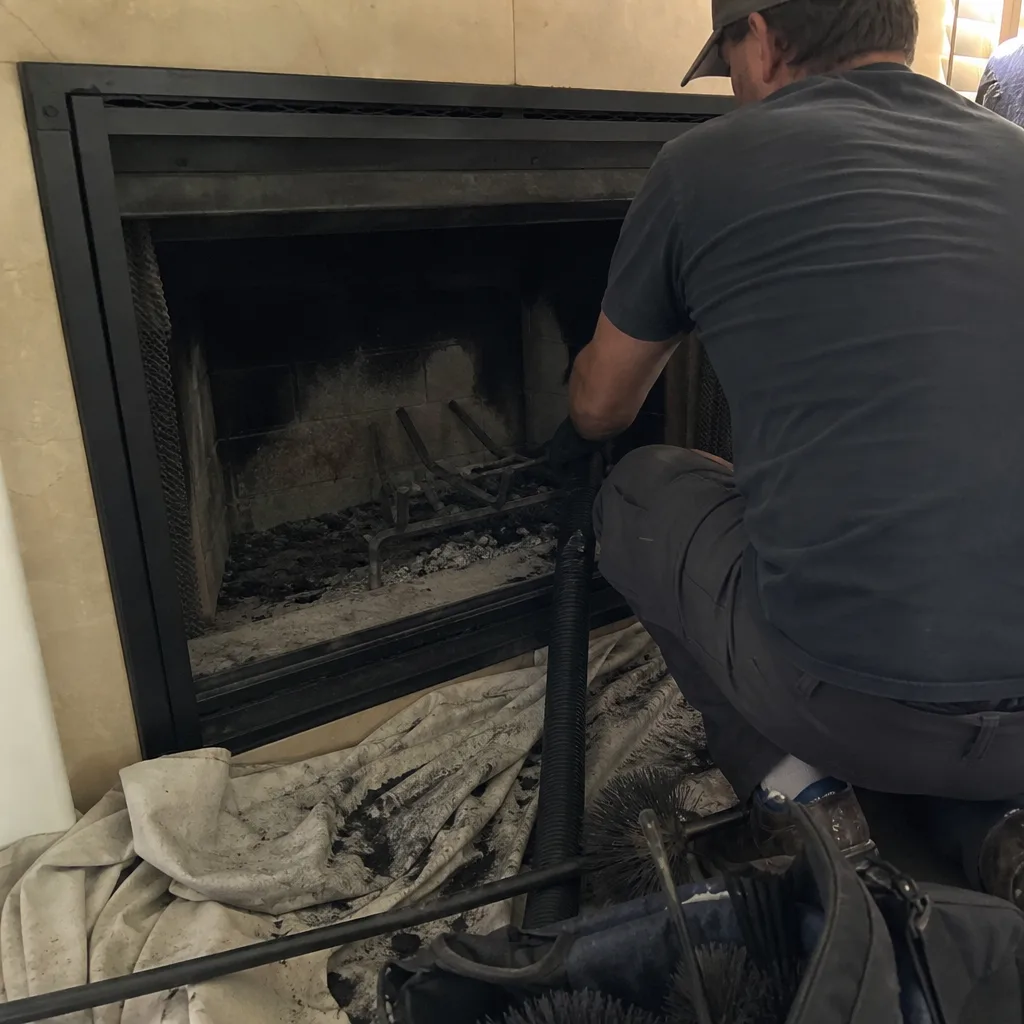 Before
 After
After