
Last updated October 15, 2026
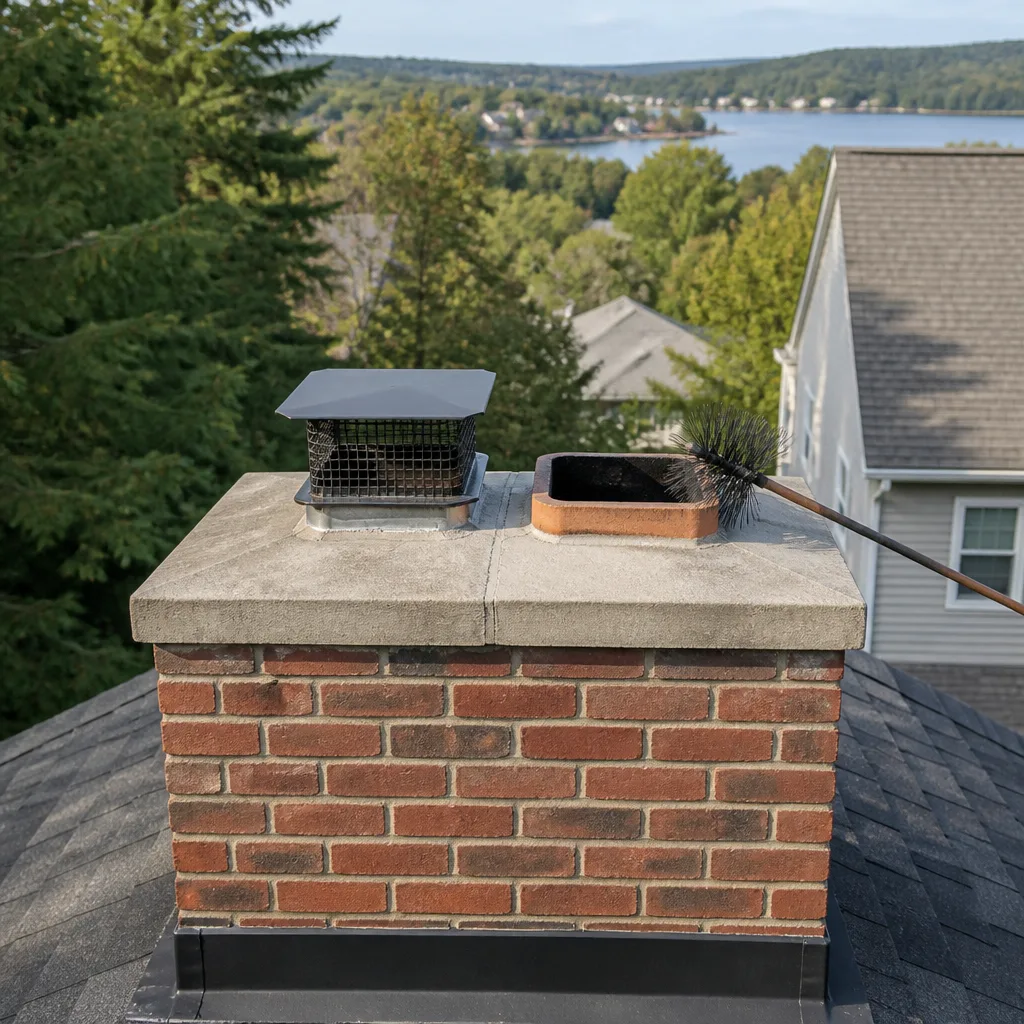 Sweep & inspection
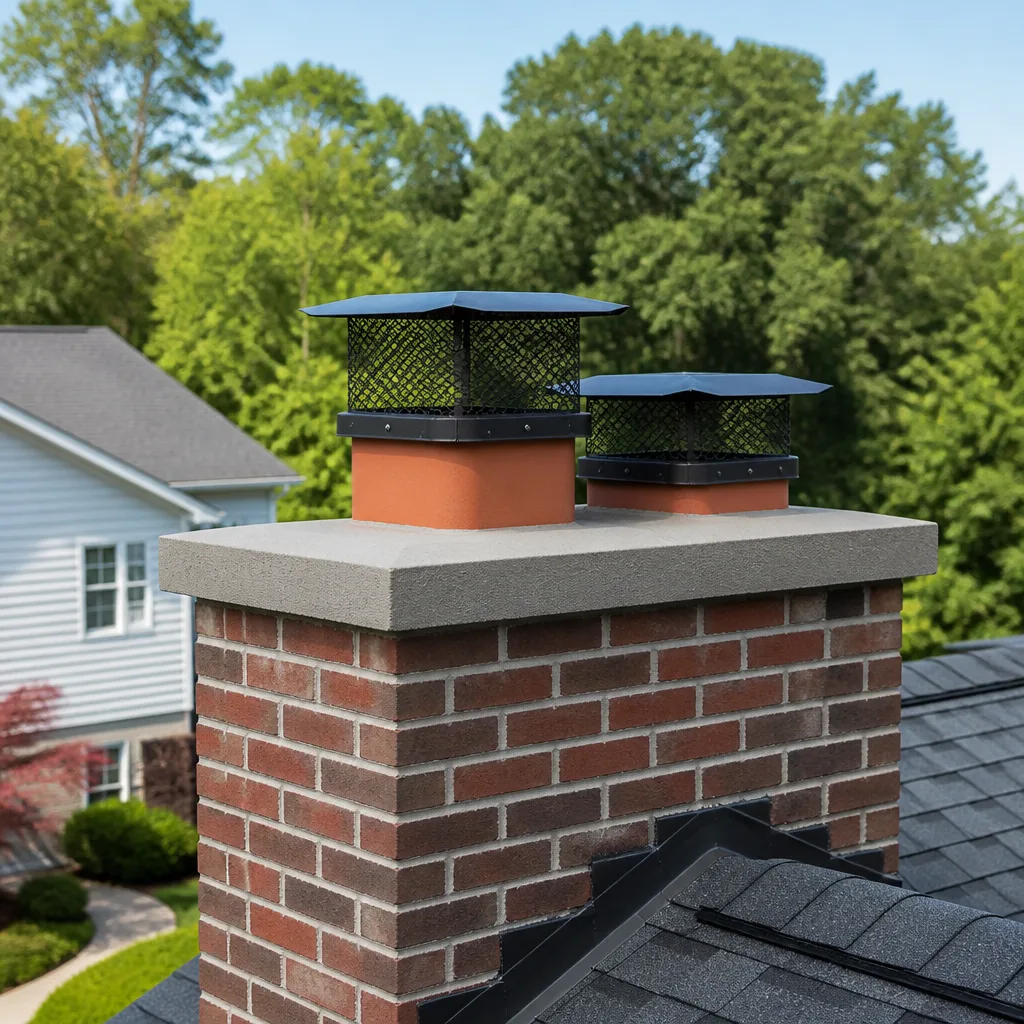 Caps & crowns
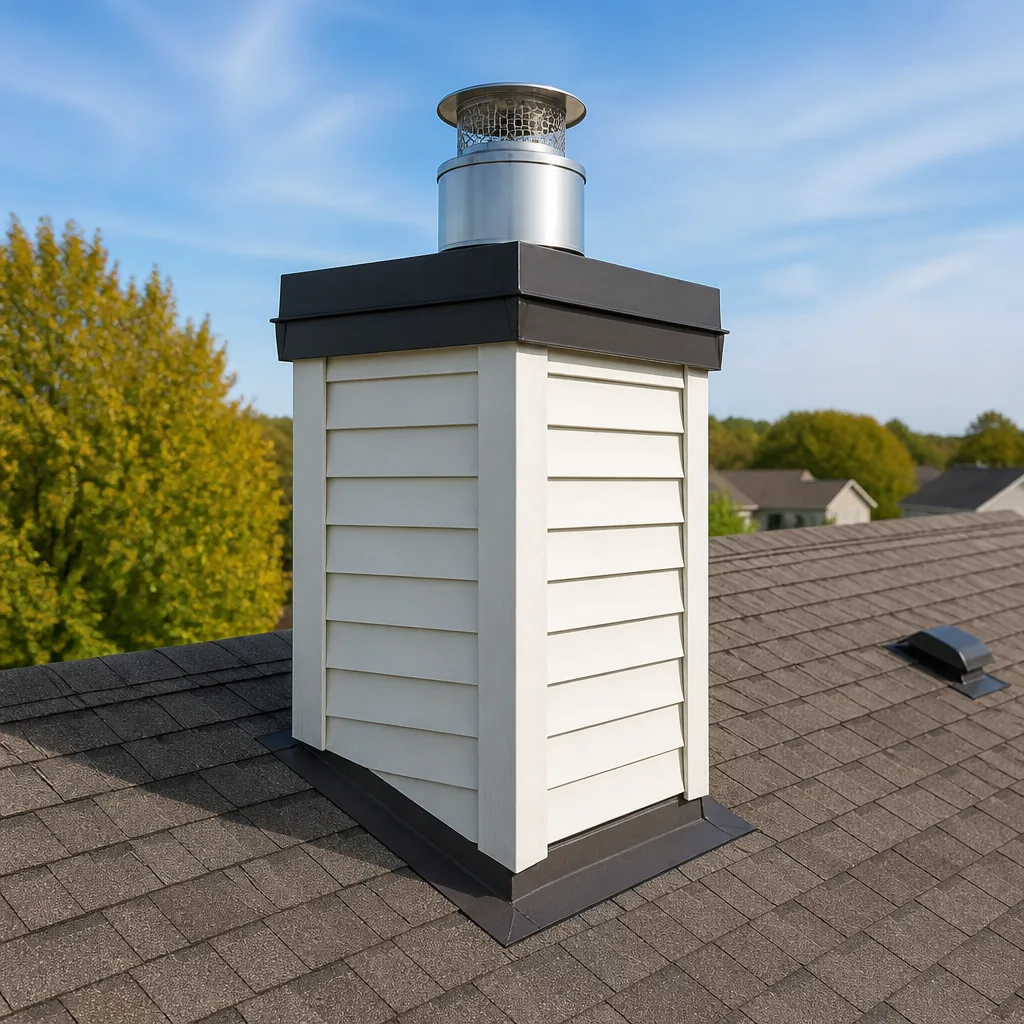 Flue relining
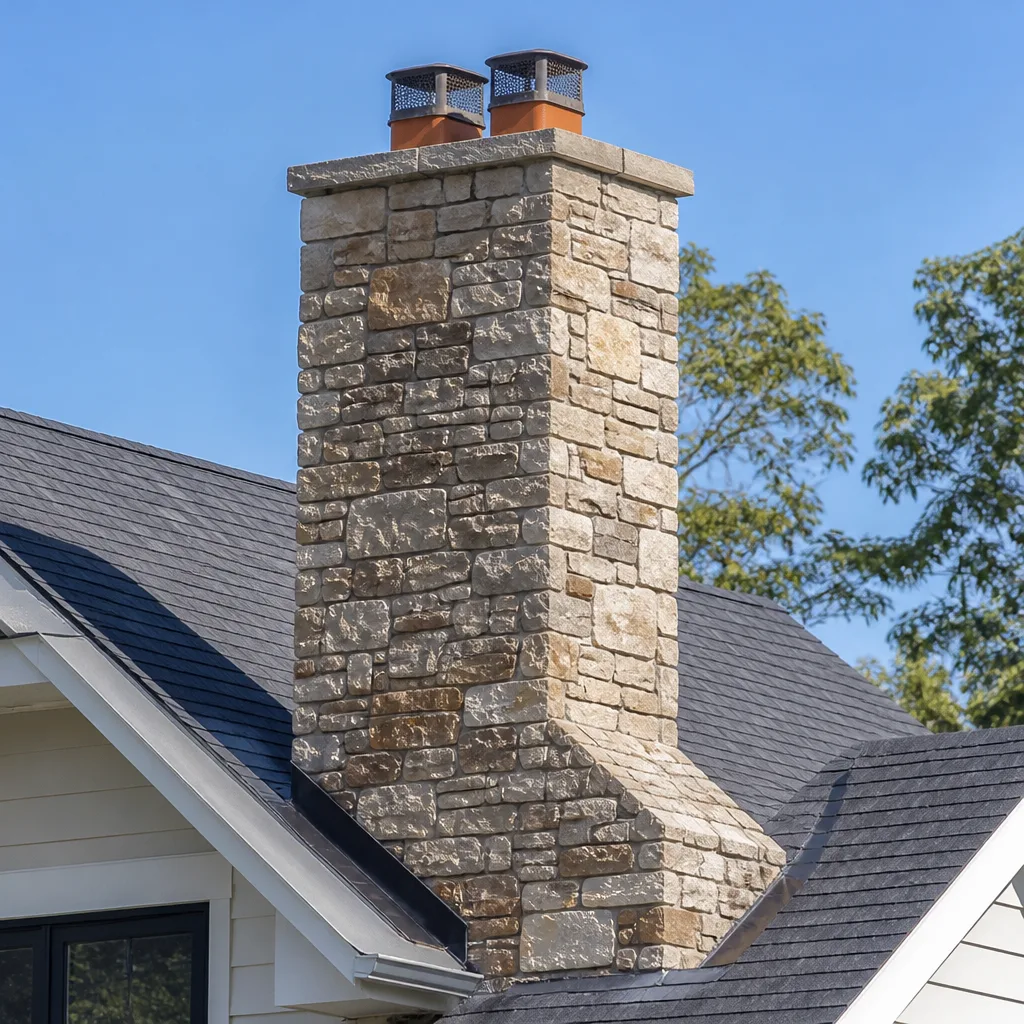 Masonry repair
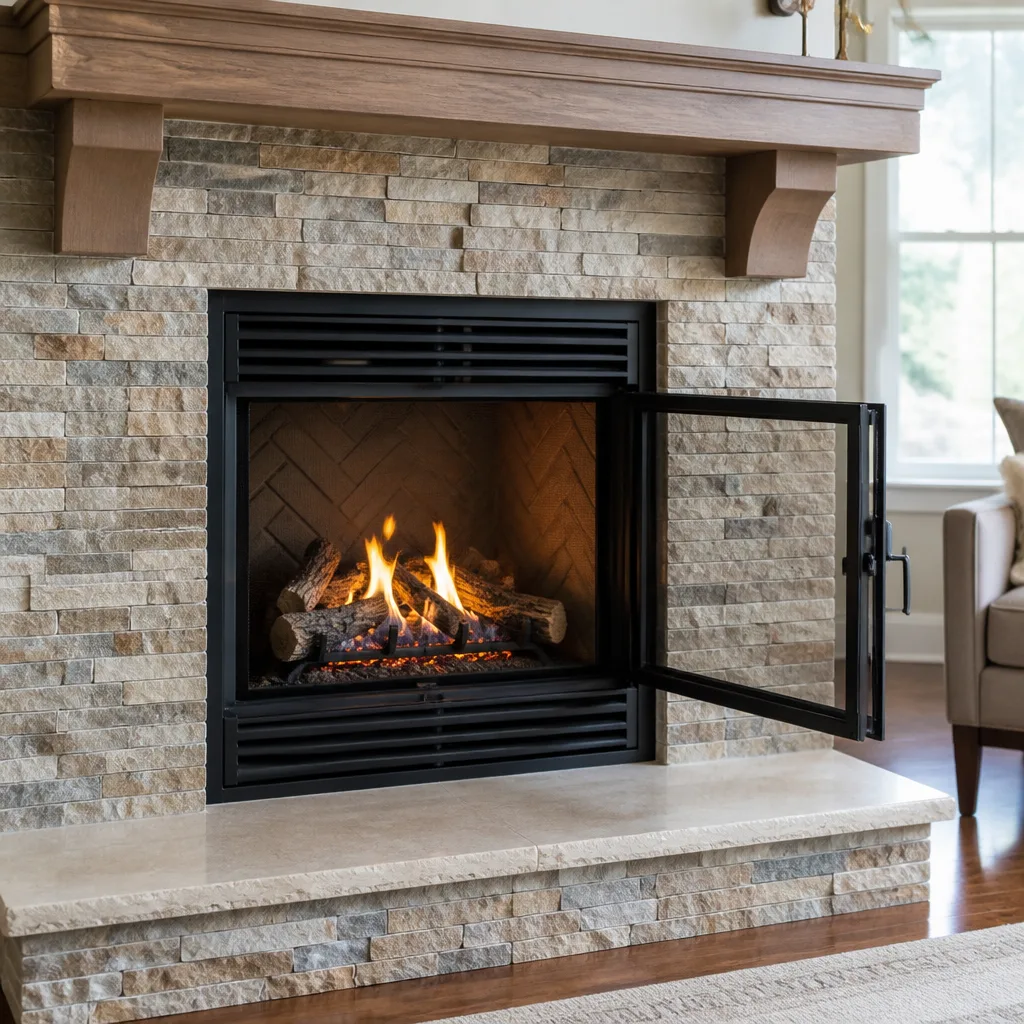 Gas fireplace service
Level 1 sweep and inspection to the NFPA 211 annual standard - flue, crown, cap, and flashing checked and photographed
Chimney sweep logs do not sweep chimneys. They loosen some creosote - which then falls where a brush and vacuum still have to collect it.
DIY vs Professional Chimney Cleaning: The Henderson Homeowner’s Decision Guide
You can legally clean your own chimney in Nevada. You can buy the brushes, the rods, the shop vacuum, and the drop cloths at any hardware store on Sunset Road or Boulder Highway, and no county inspector will knock on your door to stop you. But here’s what most DIY chimney guides won’t tell you: the brush-and-vacuum technique that works perfectly on a 20-year-old wood-burning fireplace in a cold, damp climate can push smoldering nesting material or loose flue tile fragments into a position that creates a fire hazard. That risk is higher in Henderson than most guides acknowledge, because our specific desert conditions introduce variables that untrained eyes simply cannot evaluate. This guide gives you honest criteria for when DIY is acceptable and when it is not, based on what we’ve seen in hundreds of Henderson homes since 2003.
Styles & brands we work with
Quick Answer
DIY chimney cleaning in Henderson is reasonable in three narrow scenarios: light soot on a recently inspected, straight-vertical flue; routine monthly surface cleaning of a fireplace firebox between professional sweeps; and removing small, visible creosote deposits from a masonry fireplace that had a clean inspection within the last 12 months. But if your flue has any bends, hasn’t been camera-inspected in over a year, or shows signs of animal activity, desert dust accumulation, or flue tile damage, professional cleaning is the safer and often cheaper choice once you factor in equipment costs, time, and the inspection you’ll still need. The honest truth is that most Henderson homeowners are better served by a Chimney Sweep in Henderson who works to a written promise.
Table of Contents
- When DIY Chimney Cleaning Is Reasonable in Henderson
- Five Conditions Where DIY Chimney Cleaning Is Not Safe
- DIY Tools and Materials: What You Actually Need in Henderson
- The Inspection Gap: What DIY Cleaning Cannot See
- The Real Cost of DIY vs Professional Cleaning in Henderson
- Post-DIY Checklist: Confirming You Haven’t Created New Problems
- Henderson-Specific Factors Most Guides Ignore
- Common Mistakes to Avoid
- When to Call a Professional
- Frequently Asked Questions
- The Bottom Line
When DIY Chimney Cleaning Is Reasonable in Henderson
We’re not going to pretend that every chimney needs a professional on every visit. That would be dishonest, and dishonesty is exactly what gives the chimney industry a reputation it doesn’t deserve. There are three scenarios where a Henderson homeowner with the right tools and a careful approach can handle chimney cleaning themselves.
Scenario 1: Light soot on a recently inspected, straight-vertical flue. If you had a Chimney Inspection in Henderson within the last 12 months, the inspector confirmed your flue liner is intact and your flue runs straight up with no offsets or bends, and you burn primarily seasoned hardwoods like oak or mesquite rather than pine or other resin-heavy softwoods, then light brushing with a proper chimney brush is manageable. The key word is light. If you see more than about 1/8 inch of creosote buildup, you’re outside DIY territory.
Scenario 2: Routine firebox maintenance between professional sweeps. Cleaning out cold ash, removing visible debris from the firebox floor, and gently brushing the damper area after the fire has been completely out for at least 48 hours is something any homeowner can do. This is monthly maintenance, not a substitute for an annual professional sweep. In Henderson, our dry climate means ash becomes extremely fine and airborne quickly, so wear a proper respirator and use a HEPA-filtered vacuum.
Scenario 3: Removing visible surface creosote from a fireplace that passed inspection recently. If your fireplace repair history is clean, your chimney was inspected within the last year, and you can literally see and reach the creosote deposit with a brush from inside the firebox, a careful homeowner can remove a small amount of stage-one creosote. Stage-one creosote is flaky and brushable. Anything shiny, sticky, or tar-like is stage two or three and requires a professional.
In all three scenarios, you’re still responsible for ensuring you haven’t dislodged anything into a position that could block the flue or create a hot spot. That’s where most DIY jobs go wrong, and it’s what the post-cleaning checklist below addresses.
Five Conditions Where DIY Chimney Cleaning Is Not Safe
This is the section most DIY guides skip, because it’s easier to say “hire a professional” than it is to explain why. But you deserve the actual reasoning, so you can make your own informed decision.
1. Your flue has bends, offsets, or a slope. Many Henderson homes built in the 1990s and 2000s have chimneys with one or more 15-degree or 30-degree offsets to route the flue around rooflines and trusses. A straight brush cannot navigate these bends effectively. Worse, a DIY cleaner using rods can apply lateral pressure that cracks aged flue tiles at the offset joints. We’ve seen this in homes throughout Green Valley Ranch and Anthem where the original terra cotta flue tiles had already been weakened by 25 years of summer heat cycling. A cracked flue tile is a carbon monoxide and fire risk, and you won’t know you’ve caused one until the next professional inspection.
2. You suspect or know animals have been in the chimney. Henderson’s desert environment pushes roof rats, pigeons, starlings, and occasionally raccoons into chimneys, especially in older neighborhoods near arroyos and golf courses where mature trees provide rooftop access. Dried nesting material is extremely flammable. It can also contain droppings that carry histoplasmosis and other pathogens. A brush and vacuum setup isn’t sufficient for safe removal of animal nesting material, and the typical DIY approach of burning it out is dangerous. We remove nesting material as part of professional cleaning, and we also check for the entry points that need to be sealed so the problem doesn’t return.
3. You see stage-two or stage-three creosote. Stage-one creosote is flaky and dry. Stage-two creosote is shiny, hardened, and flakes off in crunchy chunks. Stage-three creosote is a thick, tar-like glaze that is highly concentrated fuel. In Henderson’s dry climate, stage-three creosote can form quickly when homeowners burn unseasoned wood, pine, or manufactured logs in an attempt to stretch their wood supply. Removing stage-two or stage-three creosote requires chemical treatments like those from Gelco or mechanical rotary cleaning systems that most homeowners don’t own and shouldn’t rent without training. A standard wire brush will simply polish the surface of hardened creosote without removing it.
4. Your chimney hasn’t been inspected in over a year. An annual inspection is the baseline for safe chimney operation, regardless of how much or how little you burn. Without a recent inspection, you don’t know whether you have cracked flue tiles, a deteriorating mortar joint, a damaged or missing rain cap, or a chimney crown that has begun to fail. Cleaning a chimney without knowing its structural condition is like changing the oil in a car without checking whether the engine block is cracked. The cleaning might go fine, but it tells you nothing about whether the system is actually safe to use. In Henderson, our heat cycling from 110-degree summer days to cold winter nights stresses mortar joints more aggressively than in more temperate climates.
5. Your fireplace is gas, not wood-burning. Gas fireplaces and gas log sets produce different combustion byproducts and their chimneys are often not designed for the same cleaning methods as wood-burning flues. Vent-free gas systems, common in Henderson homes built in the last 20 years, don’t have a flue at all and should never be brushed. Vented gas systems can have efficiency issues related to flue sizing and vent termination that a brush won’t fix. If you have a gas fireplace, DIY chimney cleaning is simply not applicable, and you should have a professional inspect the venting system annually.
DIY Tools and Materials: What You Actually Need in Henderson
If you’ve determined that your chimney fits one of the three reasonable DIY scenarios, here’s what you actually need. This list is specific to Henderson conditions, not a generic national list.
The basic equipment list:
- A properly sized chimney brush: The brush diameter must match your flue liner’s interior diameter. A brush that’s too small won’t make contact with the flue walls. A brush that’s too large can damage the liner. For rectangular terra cotta flues common in Henderson homes built before 2000, you need a brush sized to the flue’s internal dimensions, not the exterior chimney dimensions.
- Fiberglass or polypropylene rods: These screw together and allow you to push the brush up from inside the firebox or down from the roof. Fiberglass rods are preferred because they don’t conduct electricity and are less likely to crack flue tiles than metal rods.
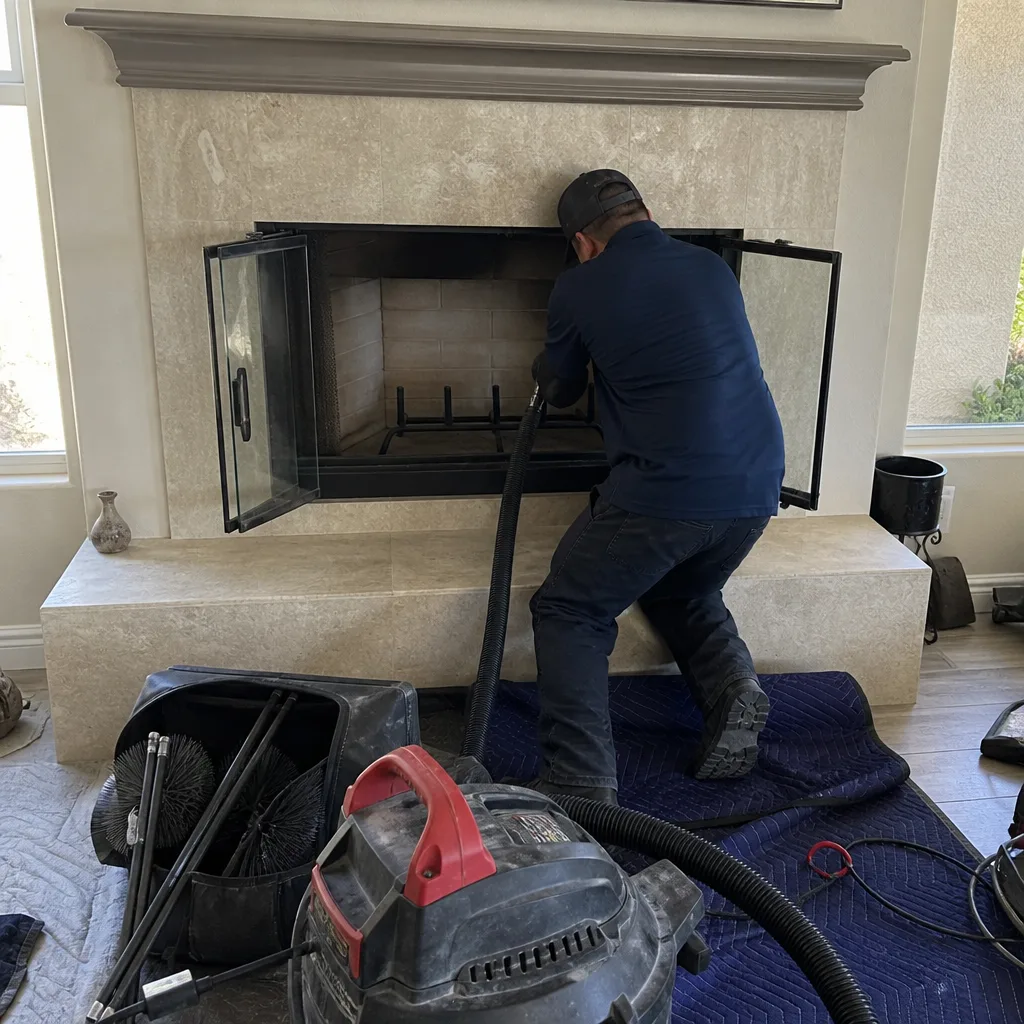
- A HEPA-filtered shop vacuum: This is non-negotiable in Henderson. Our fine desert dust combined with fine ash creates an extremely fine particulate that standard shop vacuums will push right back into your home’s air through their exhaust. A HEPA filter rated to capture particles down to 0.3 microns is required. Your kids and pets breathe the same air you do, and you don’t want fireplace ash in your living room air for the next week.
- An N95 or P100 respirator: Disposable N95 masks are the minimum for dry brushing work. P100 respirators are better, especially if you’re working in an enclosed firebox where particulate concentration will be high.
- Canvas drop cloths: Cover the floor around the fireplace opening completely, extending at least 6 feet out from the hearth. Henderson’s dry climate means ash becomes airborne easily, and it will travel farther than you expect. Canvas is better than plastic because it doesn’t become slippery underfoot, an important consideration if you have children around.
- Duct tape and polyethylene sheeting: Seal off the fireplace opening as much as possible while you work. Some homeowners create a plastic sheeting “curtain” around the firebox opening with duct tape, leaving a small access hole for the brush handle. This contains more than 90% of the particulate.
- A chimney cleaning log or creosote treatment product: In Henderson’s dry climate, creosote becomes baked-on and harder than in humid climates. Chemical products, including those from brands like Olympia Chimney, help break up stage-one creosote before you brush. Use them in the days before you plan to clean.
What you should not do: Never use a burn-out fire or high-heat fire to “clean” your chimney. This is dangerous in any climate but especially so in Henderson’s dry summer and fall conditions, when surrounding vegetation is at maximum flammability. Hot embers can exit the chimney top and ignite dry vegetation on rooftops or in gutters.
The Inspection Gap: What DIY Cleaning Cannot See
Here’s the core argument that most DIY chimney cleaning guides conveniently omit: cleaning is not inspection. A chimney brush removes surface deposits. It tells you nothing about the structural integrity of your flue, the condition of your smoke chamber, or whether your chimney liner is functioning. And in Henderson, those are exactly the areas where problems develop.
Flue tile integrity. Henderson’s temperature swings, from 100-plus degree summer afternoons to near-freezing winter nights, cause the mortar joints between terra cotta flue tiles to expand and contract. Over 20 or 30 years, this thermal cycling cracks tiles and deteriorates mortar. A brush run through a flue with cracked tiles can snag on the edges of the broken tiles, dislodging them further or, in the worst case, causing a partial flue collapse. You cannot see cracked flue tiles from inside the firebox, and you cannot see them from the roof without specialized camera equipment. Professional chimney inspectors use video scanning to identify cracks as small as a hairline, because hairline cracks widen under heat and allow carbon monoxide to leak into the home.
Smoke chamber condition. The smoke chamber is the funnel-shaped area above the firebox where smoke compresses before entering the flue. In Henderson homes built before the 1990s, smoke chambers often have corbeled brick construction with sharp edges and deep mortar recesses that collect creosote and resist cleaning. A brush run up from the firebox simply passes through the smoke chamber without cleaning its walls. Professional sweeps use specialized parging products, including materials from HeatShield, to smooth smoke chamber walls when needed. This is structural work that no brush can accomplish.
Chimney liner assessment. Metal chimney liners in Henderson homes typically last 15 to 25 years, but our dry climate and hot summers can accelerate corrosion in certain liner materials. A damaged liner isn’t visible from the firebox or the roof. It requires a camera inspection. If a liner is compromised and you continue using the fireplace, you’re risking carbon monoxide infiltration and a potential house fire. The fact that your chimney “draws fine” tells you nothing about liner integrity.
Why skipping the inspection creates liability. If you DIY clean your chimney and skip the professional inspection, and your home later experiences a chimney fire or carbon monoxide incident, your homeowner’s insurance may ask for documentation of recent professional inspection. Many policies require annual professional inspection as a condition of chimney-related claims. A DIY cleaning log doesn’t satisfy that requirement. This isn’t a scare tactic; it’s a real coverage issue that homeowners discover only after a claim is filed.
The Real Cost of DIY vs Professional Cleaning in Henderson
Most DIY chimney cleaning guides compare the cost of equipment to the cost of a professional sweep and declare DIY the winner. But that calculation ignores the inspection you’ll still need, the time involved, and the cost of correcting any problems you create. Here’s the honest math for Henderson homeowners.
DIY equipment cost, first year:
- Properly sized chimney brush: $35 to $80
- Fiberglass rods (set of 6): $50 to $120
- HEPA filter for existing shop vacuum: $30 to $60
- N95 or P100 respirator: $15 to $40
- Canvas drop cloths (2): $30 to $50
- Polyethylene sheeting and duct tape: $15 to $25
- Chemical creosote treatment: $20 to $40
- Total first-year equipment cost: $195 to $415
DIY time commitment: A first-time DIY chimney cleaning in Henderson takes between 4 and 6 hours, including setup, the cleaning itself, cleanup, and the post-cleaning checklist below. If you value your time at even $25 per hour, that’s $100 to $150 of your own time.
Professional cleaning cost in Henderson: A standard chimney sweep and inspection in Henderson typically runs between $180 and $300, depending on the type of fireplace, flue configuration, and whether any repairs or specialized cleaning are needed. That price includes the inspection, which the DIY job does not include.
The inspection you’ll still need: Even if you clean your own chimney, the CSIA and NFPA both recommend an annual professional inspection. A Level 1 inspection in Henderson typically costs $100 to $200 as a standalone service. Add this to your DIY cleaning cost and you’re at $295 to $615 for your first year, before accounting for your time.
The real comparison: In the first year, DIY cleaning plus a professional inspection costs roughly the same as, or slightly more than, a professional cleaning and inspection bundled into a single visit. In subsequent years, your DIY costs drop to just the inspection, chemical treatment, and maintenance. Over a five-year period, DIY might save you $800 to $1,200 compared to annual professional cleaning. But that savings evaporates if you cause one damaged flue tile or one missed nesting-material fire. In our experience serving Henderson homes since 2003, the families who choose professional cleaning do so not because they can’t DIY, but because the written promise and inspection documentation are worth more than the modest savings.
If you do decide to DIY, or if you want a professional cleaning with a written price before any work starts, call Kindling Chimney Henderson at (775) 485-5516. We’ll give you an honest assessment of what your chimney actually needs, nothing more.
Post-DIY Checklist: Confirming You Haven’t Created New Problems
You’ve finished brushing. The vacuum is cleaned out. The drop cloths are folded. Here’s what you need to do before you light your next fire. This checklist is designed specifically for Henderson’s dry conditions.
Step 1: Inspect the firebox and damper area with a flashlight. Look for any chunks of creosote, pieces of flue tile, or nesting material that may have fallen down during brushing. Remove everything you find. Any debris left in the firebox or on the smoke shelf can ignite during your next fire.
Step 2: Check the chimney top from the ground with binoculars. You’re looking for the rain cap. Is it still intact? Did you dislodge it? Did you see any creosote fragments fall onto the roof? In Henderson, creosote fragments on a composition shingle roof are a fire risk during the hot summer months when roof surface temperatures exceed 150 degrees. Sweep or blow off any debris you can see.
Step 3: Run a smoke test. Close all windows and exterior doors. Turn off exhaust fans and HVAC for the test. Crumple a sheet of newspaper, light it in the firebox, and watch the smoke. It should draw straight up the chimney and be visible exiting the chimney top. If smoke backs up into the room, stop immediately. Your flue is blocked, your damper is stuck, or you’ve created an obstruction. Do not build a real fire. This is a professional-level problem.
Step 4: Perform a controlled test burn. In Henderson’s dry climate, never do a test burn on a red flag warning day or when wind speeds exceed 15 mph. Use only seasoned hardwood, never pine or manufactured logs for a test fire. Build a small fire, no more than 3 or 4 split logs, and watch it carefully for 30 minutes. Pay attention to the smoke exiting the chimney: it should be light gray or white. Thick black smoke indicates a flue obstruction or poor draft, and the fire should be allowed to burn out naturally before you call a professional.
Step 5: Monitor the wall temperature in the room during the test burn. Place your hand on the wall around the fireplace opening every 5 minutes. If any spot feels hotter than the surrounding wall, or if you feel heat through the wall above the fireplace, stop using the fireplace immediately. You may have cracked a flue tile during cleaning, and heat is escaping into the wall cavity.
Step 6: Clean the vacuum filter according to manufacturer instructions. A clogged HEPA filter on a shop vacuum will push ash particulate back into your home the next time you use it. In Henderson’s dusty environment, we recommend replacing HEPA filters on any vacuum used for fireplace work every 12 months, regardless of how often you vacuum.
If any step in this checklist raises a question or concern, call Kindling Chimney Henderson at (775) 485-5516. We’ll help you determine whether a professional inspection is needed.
Henderson-Specific Factors Most Guides Ignore
Most DIY chimney cleaning guides are written for a national audience and ignore the specific conditions that make Henderson different. Here’s what those guides miss.
Fine desert particulate and HEPA filtration. Henderson sits in the Mojave Desert, and our air already carries fine particulate from natural dust, construction activity, and vehicle traffic. When you add fireplace ash to that mix, the result is an indoor air quality problem that most vacuum systems can’t handle. Standard shop vacuums exhaust particles under 1 micron back into the room. Those particles stay suspended in the air for hours and can be inhaled deeply into the lungs. This is a health concern for everyone, but especially for children, whose developing lungs are more sensitive to particulate matter. A HEPA filter is not optional in Henderson, it’s the baseline.
Caliche and mineral sediment in flues. Henderson’s soil is high in calcium carbonate, and our wind carries mineral dust that settles on rooftops and finds its way into chimneys. Over time, this mineral dust combines with creosote to form a cement-like deposit on flue walls that is extremely difficult to remove with a wire brush alone. This is a Henderson-specific problem that professional sweeps address with rotary cleaning systems and chemical treatments. If your chimney hasn’t been cleaned in several years and you notice that your brush is “skipping” across surfaces without removing the dark deposit, you may be dealing with mineral-hardened creosote, and it’s time to call a professional.
Summer heat cycling and flue tile stress. Henderson’s summer daytime temperatures regularly exceed 100 degrees from June through September. Terra cotta flue tiles absorb this heat and expand. When winter nights drop into the 30s, the tiles contract. Over 20 or 30 years, this daily thermal cycling creates micro-cracks that eventually widen into structural cracks. This is why Henderson homes built in the 1980s and 1990s often need flue liner repair or replacement sooner than homes in more temperate climates. A cracked flue tile is not visible from the firebox or the roof, and it cannot be detected by brushing. It requires camera inspection.
Nesting season timing. In Henderson, nesting season for roof rats, pigeons, and starlings typically runs from March through September, longer than in colder climates. A chimney that’s empty in January may have an active nest by April. If you do clean your own chimney in the spring or summer, be aware that you may encounter live animals or active nesting material. Removing nests from a chimney in Henderson is legal, but handling nesting material from roof rats or pigeons requires protective equipment and proper disposal methods. This is one more reason many Henderson homeowners choose professional cleaning during nesting season.
Common Mistakes to Avoid
- Using a chimney cleaning log as a substitute for brushing. Chemical cleaning logs can help loosen stage-one creosote, but they don’t remove it. The loosened creosote falls onto the smoke shelf and can create a fire hazard that’s actually worse than the original buildup. We’ve seen this in Henderson homes where homeowners used cleaning logs for years without ever brushing, creating a thick layer of flammable material on the smoke shelf.
- Brushing from the roof without proper fall protection. Many Henderson homes have steep roof pitches and tile roofs that are slippery and fragile. A fall from even a one-story roof can cause serious injury. If you cannot safely access your chimney top with proper ladder setup and fall protection, clean from inside the firebox or hire a professional.
- Using the wrong size brush. A brush that’s too large can crack flue tiles. A brush that’s too small can wedge between flue tiles and become stuck. Brushes stuck in chimneys are one of the most common calls we get from DIY chimney cleaners in Henderson, and removing a stuck brush often costs more than the professional cleaning would have in the first place.
- Skipping the damper inspection. Your damper must fully open and close properly. A damper that’s stuck open wastes heated air in winter and cooled air in summer. A damper that’s stuck closed causes smoke to back up into the home. Many Henderson homeowners skip the damper check during DIY cleaning because it’s not visible without a flashlight and mirror, and a broken damper isn’t discovered until the first cold night.
- Neglecting the smoke chamber and smoke shelf. The smoke chamber and smoke shelf are above the damper and below the flue, and they’re the areas where creosote and debris accumulate most heavily. A brush run up from the firebox passes through these areas without cleaning them. Professional sweeps use specialized tools to access and clean the smoke chamber.
- Ignoring the rooftop rain cap. In Henderson’s windy conditions, rain caps can loosen over time. A loose or damaged rain cap allows rain, birds, and debris to enter the chimney. If you’re doing any chimney work yourself, include a visual check of the rain cap from the ground with binoculars, and if it’s damaged, have it replaced before the next rain event.
When to Call a Professional
Call a professional if your chimney hasn’t been inspected in over a year, if you see shiny or tar-like creosote, if you suspect animal activity, if your flue has bends or offsets, or if you simply don’t want to spend 4 to 6 hours on a ladder and in your fireplace when you could be doing something else with your weekend. If you’ve been using your fireplace regularly in a Henderson home built before the year 2000 and you don’t know the condition of your flue tiles, a professional inspection is the single smartest chimney decision you can make. Kindling Chimney Henderson offers free estimates in Henderson, and our team works to a written care promise on every visit, with the price delivered before any work starts. Call (775) 485-5516 and a live person will answer.
Frequently Asked Questions
A standard chimney sweep and inspection in Henderson typically runs between $180 and $300, depending on your fireplace type, flue configuration, and whether the chimney has any special conditions like animal nesting material or stage-three creosote. At Kindling Chimney Henderson, the written price is delivered before any work starts, so you never face a surprise charge. Call (775) 485-5516 for an exact quote, and the estimate is free.
The National Fire Protection Association recommends annual inspection and cleaning as needed, and that’s the baseline for Henderson homes as well. In our dry climate, creosote doesn’t necessarily accumulate faster than in humid climates, but mineral-hardened creosote and nesting material are more common, and both require professional attention. If you burn more than one cord of wood per year or burn during three seasons instead of just winter, schedule professional cleaning twice a year.
Yes, Nevada does not prohibit homeowners from cleaning their own chimneys. The decision is about safety and thoroughness, not legality. Cleaning a chimney without an inspection may violate the terms of some homeowner’s insurance policies that require annual professional inspection, so check your policy before making DIY your only chimney maintenance strategy.
Creosote continues to build up, and in Henderson’s dry climate, it dries and hardens into a highly flammable glaze. Nesting material accumulates during the long Henderson nesting season. Flue tile damage from thermal cycling goes undetected. The first symptom may be a chimney fire or carbon monoxide backdraft, and at that point, the repair cost is significantly higher than the cleaning would have been. We don’t use scare tactics, but we do tell you the truth: skipped maintenance is the leading cause of expensive chimney repairs.
Gas fireplaces do not produce creosote and do not require sweeping in the traditional sense. However, gas fireplace venting systems should be inspected annually for blockages, corrosion, and proper termination. Vent-free gas systems have specific clearance and ventilation requirements that a professional can verify. If you have a gas fireplace in your Henderson home, the annual service you need is an inspection, not a sweeping.
A chimney sweep removes creosote and debris from the flue and firebox. A Chimney Inspection in Henderson evaluates the structural condition of the chimney, including flue tile integrity, liner condition, smoke chamber construction, and clearances to combustibles. At Kindling Chimney Henderson, every professional cleaning includes an inspection as part of the written price, so you get both in a single visit. Call (775) 485-5516 to schedule.
The Bottom Line
DIY chimney cleaning in Henderson is reasonable in three narrow scenarios: light soot on a recently inspected straight flue, routine firebox maintenance between professional sweeps, or removal of visible stage-one creosote from a recently inspected fireplace. Outside those scenarios, the variables our desert environment introduces make professional cleaning the safer and often more cost-effective choice, especially when you factor in the inspection you’ll still need and the equipment you’ll have to buy. The families we serve in Henderson aren’t paying for a brush going up a flue; they’re paying for the trained eyes that see what a brush cannot. If you want a straightforward answer about what your chimney actually needs, call Kindling Chimney Henderson at (775) 485-5516. A live person answers every call, and the estimate is always free.
Written by Danny Cortes, Owner at Kindling Chimney Henderson, serving Henderson since 2003.
See the difference
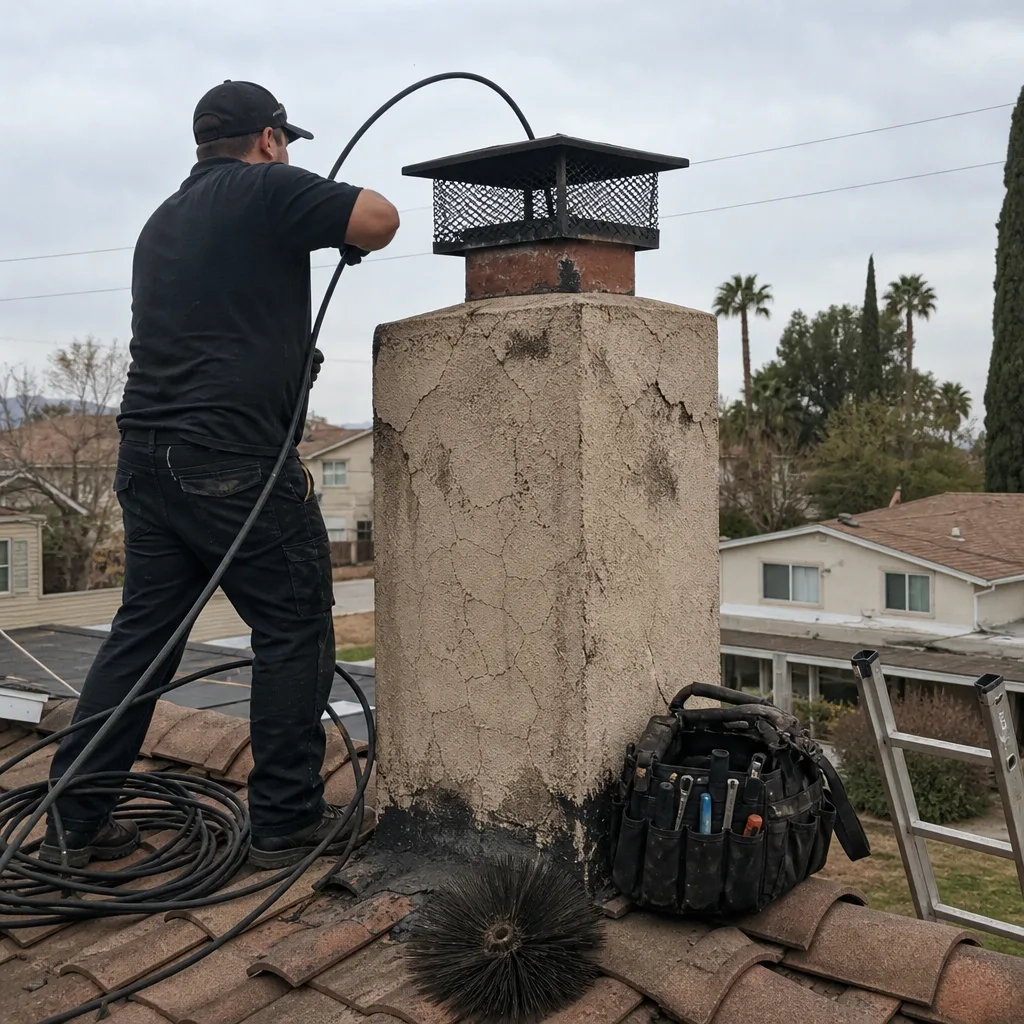 Before
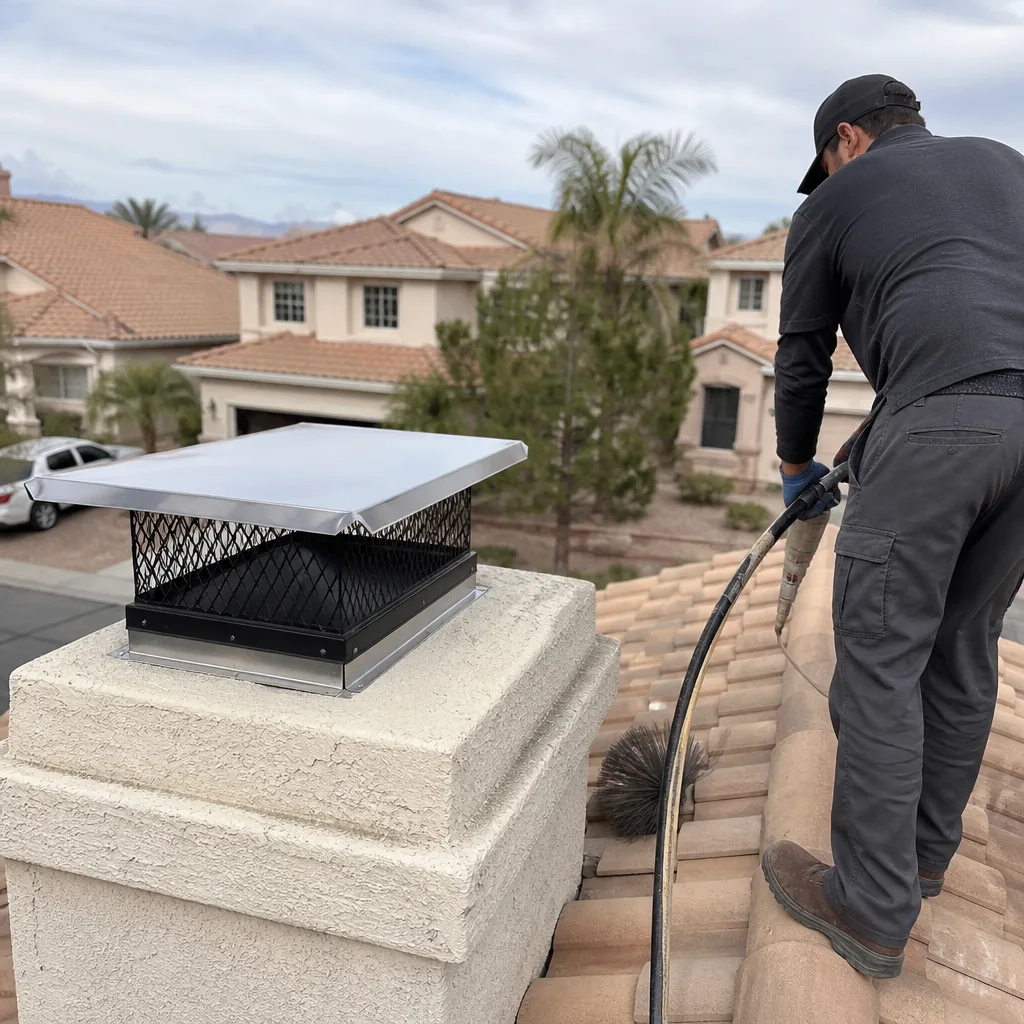 After
After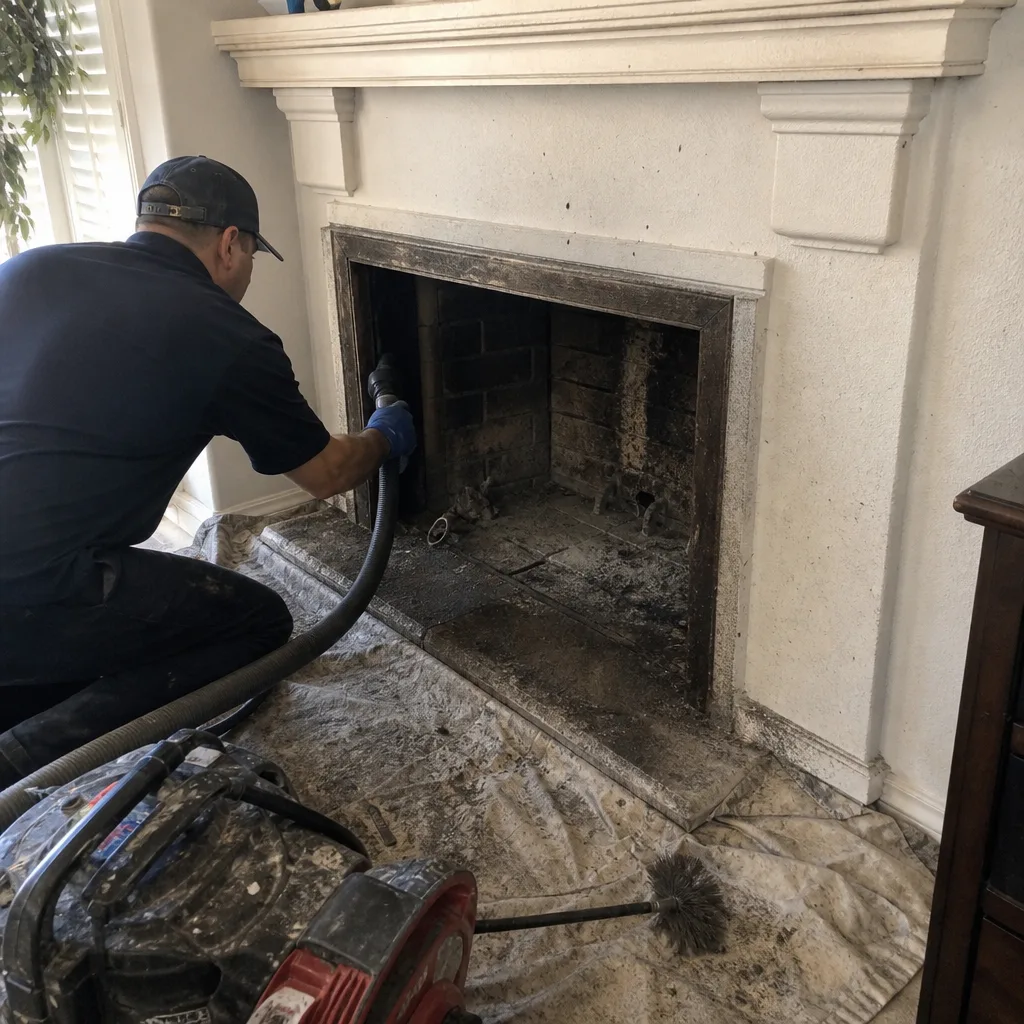 Before
 After
After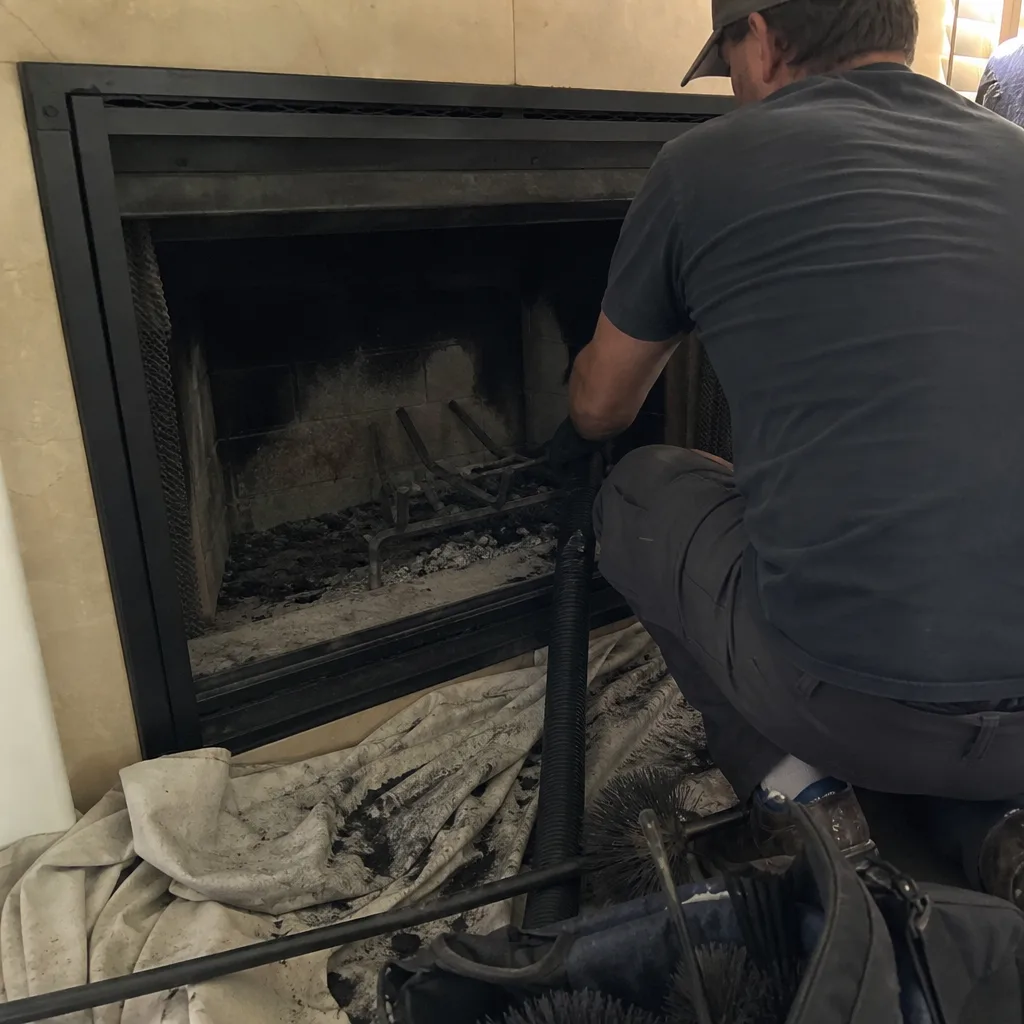 Before
 After
After